Unlock Restaurant-Quality Flavor: Your Guide to Perfect Homemade Teriyaki Salmon
Are you tired of bland weeknight dinners or constantly searching for new, exciting dishes that are both delicious and healthy? Imagine a dish that brings vibrant flavor to your table with minimal effort, transforming everyday ingredients into a culinary masterpiece. This guide will walk you through crafting the ultimate Teriyaki Salmon, a dish that’s not only incredibly satisfying but also surprisingly simple to prepare at home. Beyond its delectable taste, mastering this recipe opens the door to a world of easy salmon recipes, empowering you to create nourishing and impressive meals with confidence. Get ready to elevate your cooking game and discover the joy of homemade excellence!
Ingredients & Kitchen Tools
Crafting the perfect Teriyaki Salmon requires a few essential ingredients and basic kitchen tools. This list includes everything you’ll need, along with helpful clarifications and optional substitutions.
- Salmon Fillets (4x 6oz portions): Wild-caught sockeye or Atlantic salmon are excellent choices for their flavor and texture. Look for fillets with skin on for extra crispiness.
- Soy Sauce (½ cup, low-sodium preferred): Provides the foundational umami and saltiness of the teriyaki. Tamari is a great gluten-free alternative.
- Mirin (¼ cup): Japanese sweet rice wine, essential for the authentic teriyaki glaze. If unavailable, a dry sherry or sake with a pinch of sugar can work in a pinch.
- Sake (2 tablespoons, optional): Enhances depth of flavor. If omitting, increase mirin slightly or use an extra tablespoon of soy sauce.
- Brown Sugar (2 tablespoons, packed): Adds sweetness and helps create a beautiful caramelization. Maple syrup or honey can be used for a slightly different flavor profile.
- Fresh Ginger (1 tablespoon, grated): Adds a zesty, aromatic kick.
- Garlic (2 cloves, minced): Essential for savory depth.
- Cornstarch (1 teaspoon, mixed with 1 tablespoon water): Creates a slurry to thicken the teriyaki glaze.
- Sesame Oil (1 teaspoon): For a nutty finish to the sauce.
- Vegetable Oil (1 tablespoon): For searing the salmon.
- Optional Garnishes: Toasted sesame seeds, sliced green onions, lime wedges.
- Kitchen Tools: Medium saucepan, whisk, non-stick skillet or cast-iron pan, tongs, cutting board, sharp knife.
Prep Time & Cooking Schedule
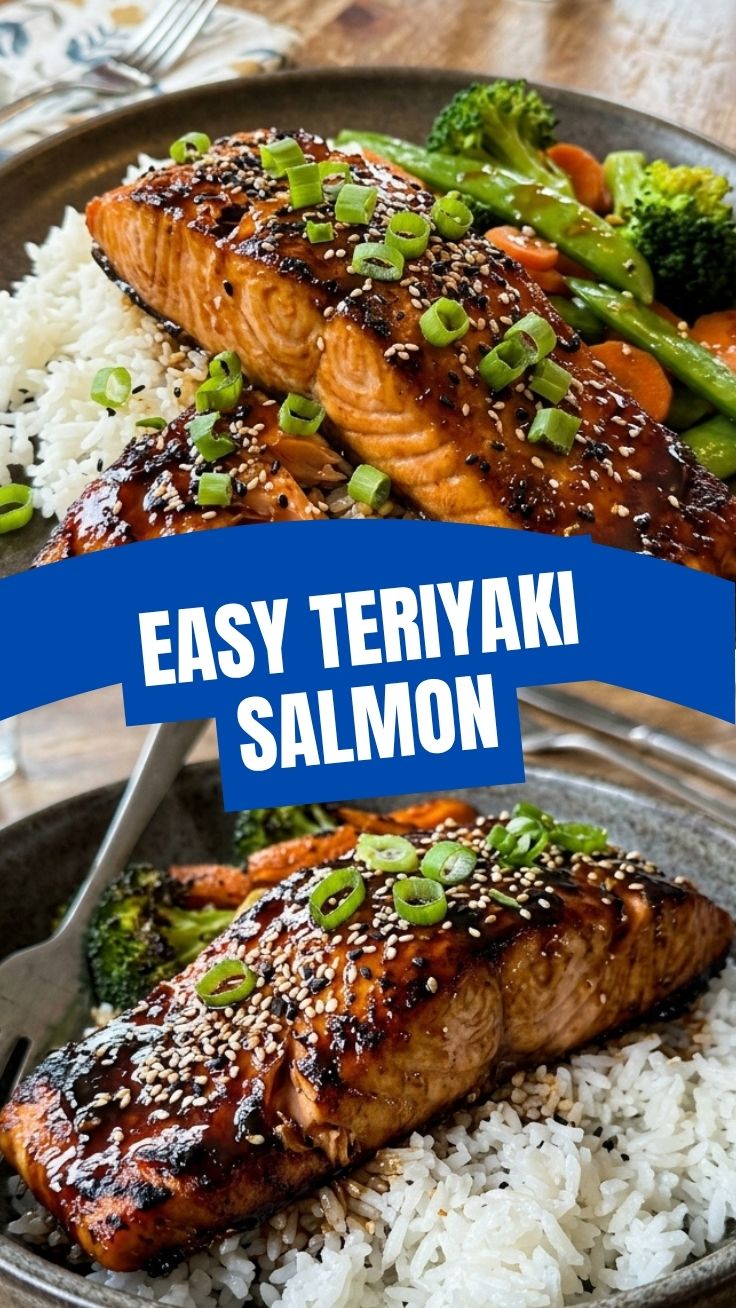
Planning is key for a stress-free cooking experience. This Teriyaki Salmon recipe is designed to be efficient without compromising on flavor.
- Prep Time: 15 minutes (Includes making the sauce and prepping salmon).
- Marinating Time: 30 minutes (minimum) to 2 hours (for deeper flavor).
- Cook Time: 10-15 minutes (depending on thickness of fillets and desired doneness).
- Resting Time: 5 minutes (allows juices to redistribute for a tender, flaky salmon).
We recommend starting the teriyaki sauce first, then marinating the salmon while you prepare any side dishes. This ensures everything is ready to go when it’s time to cook.
Step-by-Step Instructions
Follow these clear, concise steps to create a show-stopping Teriyaki Salmon that will impress even the most discerning palates. And remember, once you master this, a world of easy salmon recipes awaits!
1. Prepare the Teriyaki Sauce: In a medium saucepan, whisk together soy sauce, mirin, sake (if using), brown sugar, grated ginger, and minced garlic. Bring to a gentle simmer over medium heat, stirring until the sugar dissolves.
2. Thicken the Sauce: In a small bowl, whisk together cornstarch and water to create a slurry. Slowly add the slurry to the simmering sauce, whisking constantly until the sauce thickens to your desired consistency (it should coat the back of a spoon). Remove from heat and stir in the sesame oil. Set aside about ¼ cup of the sauce for drizzling later.
3. Marinate the Salmon: Place salmon fillets in a shallow dish or a zip-top bag. Pour the remaining teriyaki sauce over the salmon, ensuring each piece is well-coated. Marinate in the refrigerator for at least 30 minutes, or up to 2 hours for maximum flavor.
4. Sear the Salmon: Heat vegetable oil in a large non-stick or cast-iron skillet over medium-high heat until shimmering. Carefully remove salmon from the marinade, letting any excess drip off (discard remaining marinade). Place salmon skin-side down (if applicable) in the hot pan.
5. Cook to Perfection: Sear for 4-6 minutes on the skin side until crisp and golden. Flip the salmon and cook for another 3-5 minutes, or until cooked through and flakes easily with a fork. The internal temperature should reach 145°F (63°C). Avoid overcooking, as salmon can dry out quickly.
6. Rest and Serve: Transfer the cooked salmon to a plate and let it rest for 5 minutes. Drizzle with the reserved teriyaki sauce and garnish with toasted sesame seeds and green onions, if desired. Serve immediately with your favorite sides.
Nutritional Benefits & Advantages
Salmon is a nutritional powerhouse, making this Teriyaki Salmon a fantastic choice for a healthy and balanced diet. It’s an excellent source of omega-3 fatty acids, crucial for heart health, brain function, and reducing inflammation. Salmon also provides high-quality protein, supporting muscle growth and repair, and is rich in Vitamin D, essential for bone health and immune function. The addition of ginger and garlic in the teriyaki sauce further boosts its antioxidant and anti-inflammatory properties, making this dish both delicious and incredibly beneficial for your well-being.
Tips, Variations & Cooking Advice
- Grilling Option: For a smoky flavor, grill the salmon! Marinate as directed, then grill over medium-high heat for 4-5 minutes per side, brushing with the reserved sauce during the last few minutes.
- Baking Salmon: If you prefer baking, preheat your oven to 400°F (200°C). Place marinated salmon on a parchment-lined baking sheet and bake for 12-18 minutes, or until cooked through.
- Spicy Kick: Add a pinch of red pepper flakes or a dash of sriracha to your teriyaki sauce for a subtle heat.
- Citrus Burst: A squeeze of fresh orange or lime juice in the sauce can lighten the flavor profile.
- Vegetable Medley: Cook some broccoli, asparagus, or bell peppers alongside your salmon or stir into the pan with some of the teriyaki glaze for a complete meal.
- Gluten-Free: Ensure you use tamari instead of soy sauce and verify all other ingredients are gluten-free.
- Sugar-Free: Substitute brown sugar with an equivalent amount of a natural sweetener like erythritol or monk fruit sweetener.
Common Mistakes to Avoid
- Overcooking the Salmon: This is the most common mistake! Salmon cooks quickly. Aim for an internal temperature of 145°F (63°C) and look for it to flake easily. Overcooked salmon becomes dry and tough.
- Not Reducing the Sauce Enough: The teriyaki sauce needs to simmer to develop its rich flavor and thicken properly. Don’t rush this step.
- Over-Marinating: While marinating adds flavor, don’t leave salmon in the acidic marinade for too long (over 2 hours) as it can start to “cook” the fish, leading to a mushy texture.
- Crowding the Pan: If cooking multiple fillets, ensure there’s enough space in the skillet. Crowding lowers the pan temperature, resulting in steamed rather than seared salmon. Cook in batches if necessary.
- Discarding all Marinade: Remember to reserve some of the cooked sauce for drizzling after the salmon is cooked for maximum flavor.
Storage & Meal Prep Tips
This Teriyaki Salmon is fantastic for meal prep!
- Refrigeration: Store leftover cooked salmon in an airtight container in the refrigerator for up to 3 days.
- Freezing: While possible, freezing cooked salmon can slightly alter its texture. If freezing, wrap individual portions tightly in plastic wrap and then aluminum foil before placing in a freezer-safe bag for up to 2-3 months. Thaw overnight in the refrigerator.
- Reheating: To maintain moisture, gently reheat salmon in the microwave on low power, or in a preheated oven at 275°F (135°C) until just warmed through. Avoid high heat, which will dry it out.
- Meal Prep Bowls: Cook extra rice and steam some vegetables to create ready-to-eat meal prep bowls for lunches throughout the week.
Conclusion
There you have it – a comprehensive guide to preparing a truly exceptional Teriyaki Salmon that rivals any restaurant dish. By following these steps, understanding the nuances of ingredients, and being mindful of common pitfalls, you’re not just cooking a meal, you’re cultivating a culinary skill that will serve you for years to come. This recipe is a testament to how simple ingredients can create profound flavors, and it’s a perfect stepping stone to exploring more easy salmon recipes to diversify your routine. We encourage you to try this recipe, experiment with the variations, and share your delicious creations with your loved ones. Happy cooking!
FAQs
Q1: Can I use pre-made teriyaki sauce?
A1: While you can, making your own teriyaki sauce from scratch allows for control over ingredients (like sugar and sodium) and offers a fresher, more robust flavor.
Q2: What’s the best way to get crispy salmon skin?
A2: Ensure your pan is hot with a little oil, and place the salmon skin-side down. Cook for the majority of the time on this side without moving it, allowing it to get golden and crisp.
Q3: How do I know when the salmon is cooked through?
A3: Salmon is done when it flakes easily with a fork and is opaque throughout. An instant-read thermometer inserted into the thickest part should register 145°F (63°C).
Q4: Can I marinate the salmon overnight?
A4: It’s not recommended to marinate salmon in a highly acidic sauce for longer than 2 hours, as the acid can start to “cook” the fish and make it mushy. For deeper flavor without over-marinating, try brining the salmon in a mild saltwater solution for a few hours before marinating for a shorter period.