Unlocking the Hearty Secret: Why Your Kitchen Needs This Pasta e Fagioli Recipe Right Now
Craving a dish that’s both soul-satisfying and surprisingly simple to whip up at home? You’ve landed in the perfect spot. Today, we’re diving deep into the art of creating the ultimate Pasta e Fagioli, a classic Italian comfort food that’s far more than just a soup; it’s a culinary hug in a bowl. Moving beyond mere pasta recipes, this particular dish elevates humble ingredients to a symphony of flavors and textures, proving that gourmet taste doesn’t require a professional kitchen. Preparing this at home allows you to control the freshness of your ingredients and tailor it precisely to your family’s preferences, something store-bought versions simply can’t offer. Get ready to transform your regular dinner routine into an unforgettable experience.
Ingredients & Kitchen Tools
Gather your culinary arsenal! Here’s what you’ll need to create this comforting Italian masterpiece:
- 1 tbsp Olive Oil: Essential for sautéing and building a flavorful base.
- 1 medium Yellow Onion, diced: Adds a foundational sweetness and aroma.
- 2 cloves Garlic, minced: Infuses robust, aromatic depth.
- 1 large Carrot, diced: Contributes natural sweetness and a vibrant color.
- 2 stalks Celery, diced: Offers an earthy crunch and aromatic complexity.
- 1 (14.5 oz) can Diced Tomatoes, undrained: Provides a tangy, rich tomato base.
- 4 cups Vegetable Broth (or chicken broth for a non-vegetarian option): The liquid foundation for our savory soup.
- 1 (15 oz) can Cannellini Beans, rinsed and drained: Creamy and protein-rich, these are key to the “fagioli” (beans).
- ½ cup Ditalini pasta (or small elbow macaroni): The “pasta” component, perfect for soaking up the broth.
- 1 tsp Dried Oregano: Classic Italian herb for a warm, earthy flavor.
- ½ tsp Dried Thyme: Complements the oregano, adding a subtle, peppery note.
- Salt and Black Pepper, to taste: Essential for seasoning and balancing flavors.
- Fresh Parsley, chopped (for garnish): Adds a burst of freshness and color.
- Parmesan Cheese, grated (for serving): Optional, but highly recommended for a salty, umami finish.
Kitchen Tools:
- Large Pot or Dutch Oven: Ideal for simmering soups evenly.
- Cutting Board and Chef’s Knife: For all your chopping needs.
- Measuring Cups and Spoons: For precise ingredient quantities.
- Can Opener: For the tomatoes and beans.
- Colander: For rinsing the beans.
- Ladle: For serving your delicious creation.
Prep Time & Cooking Schedule
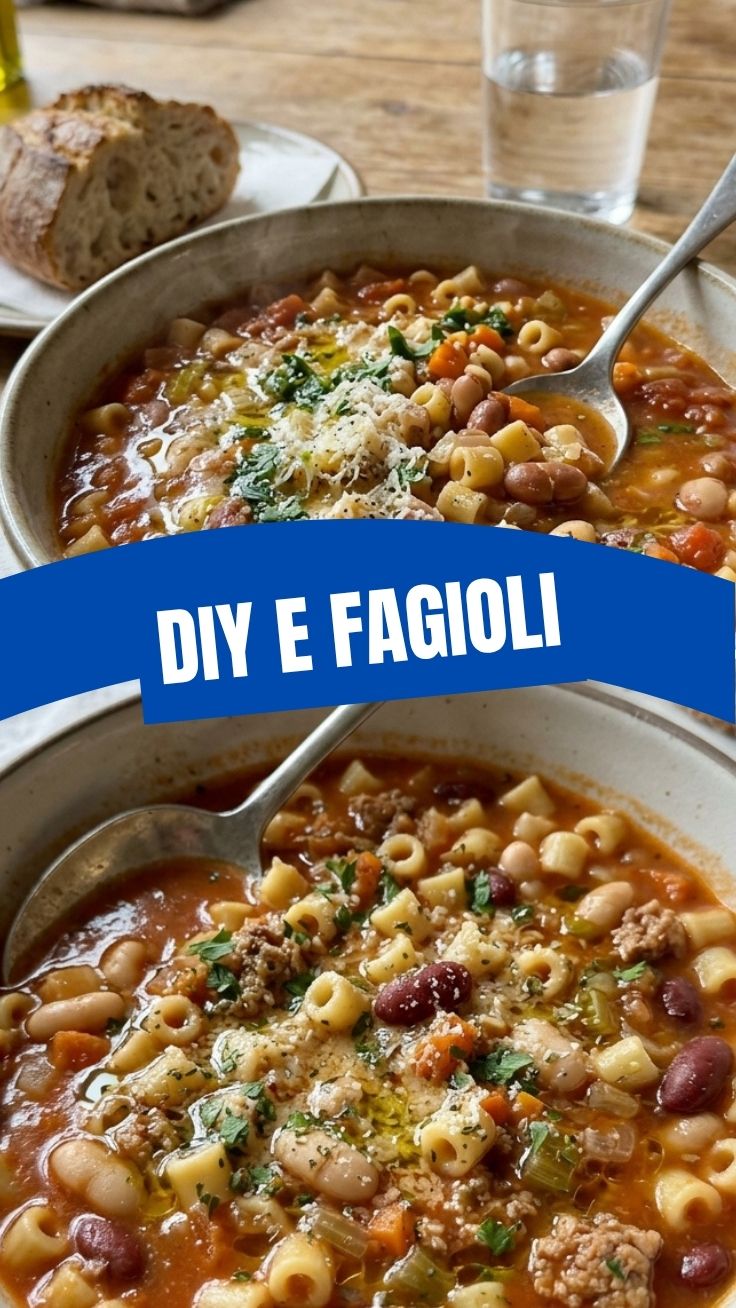
This recipe is designed for ease and efficiency, making it perfect for both weeknight dinners and leisurely weekend meals.
- Prep Time: 15 minutes (mainly chopping vegetables).
- Cook Time: 30-35 minutes (active cooking and simmering).
- Resting Time: 5 minutes (allowing flavors to meld and pasta to fully absorb liquid).
Plan to start chopping your vegetables first. While they sauté, you can open and rinse your canned goods. The entire process, from start to simmering, is streamlined, ensuring you’ll have a delightful, hot meal on the table in under an hour.
Step-by-Step Instructions
1. Sauté Aromatics: Heat the olive oil in your large pot or Dutch oven over medium heat. Add the diced onion, carrot, and celery. Sauté for 5-7 minutes, stirring occasionally, until the vegetables begin to soften and become fragrant.
2. Infuse with Garlic: Stir in the minced garlic and cook for another minute until aromatic, being careful not to burn it. Burnt garlic can turn bitter quickly.
3. Build the Base: Pour in the undrained diced tomatoes, vegetable broth, dried oregano, and dried thyme. Bring the mixture to a gentle boil, then reduce the heat to low, cover, and simmer for 15 minutes to allow the flavors to meld. This step is crucial for developing the rich base of your Pasta e Fagioli.
4. Add Beans & Pasta: Stir in the rinsed cannellini beans and the Ditalini pasta. Increase the heat to medium-low and continue to simmer, uncovered, for another 10-12 minutes, or until the pasta is al dente (cooked through but still firm to the bite). Watch carefully; you don’t want mushy pasta! This is a flexible recipe, and if you want to explore other pasta recipes, remember that al dente is usually the goal.
5. Season and Serve: Season generously with salt and black pepper to taste. Ladle the hot soup into bowls, garnish with fresh parsley and a sprinkle of grated Parmesan cheese, if desired. Serve immediately.
Nutritional Benefits & Advantages
This Pasta e Fagioli recipe is a nutritional powerhouse disguised as comfort food. The cannellini beans are an excellent source of plant-based protein and dietary fiber, promoting satiety and digestive health. The array of vegetables (onions, carrots, celery, tomatoes) contributes essential vitamins, minerals, and antioxidants, supporting overall well-being. Using whole wheat pasta can further boost fiber content. It’s a low-fat, nutrient-dense meal that provides sustained energy without weighing you down, making it an ideal choice for a balanced diet.
Tips, Variations, & Cooking Advice
- Spice It Up: For a touch of heat, add a pinch of red pepper flakes along with the garlic.
- Protein Boost: To make it even heartier, you can brown some Italian sausage or ground beef with the initial aromatics.
- Vegetable Swap: Feel free to incorporate other vegetables like spinach, zucchini, or chopped bell peppers during the last 5-10 minutes of simmering.
- Gluten-Free: Use gluten-free Ditalini pasta to make this recipe suitable for those with gluten sensitivities.
- Texture Control: For a creamier soup, you can mash about a quarter of the cannellini beans against the side of the pot before adding them.
Common Mistakes to Avoid
- Overcooking Pasta: The biggest culprit for a disappointing Pasta e Fagioli. Unlike other pasta recipes, pasta in soup continues to absorb liquid and cook even after it’s removed from the heat. Cook it until just al dente.
- Undercooked Aromatics: Don’t rush the sautéing step. Properly softened onions, carrots, and celery form the flavor foundation of your soup.
- Not Rinsing Beans: Always rinse canned beans to remove excess sodium and improve their texture.
- Forgetting to Season: Taste and adjust seasoning throughout the cooking process. Salt and pepper bring out all the other flavors.
Storage & Meal Prep Tips
Leftover Pasta e Fagioli tastes even better the next day as the flavors continue to meld. Store it in an airtight container in the refrigerator for up to 3-4 days. Be aware that the pasta will absorb more liquid over time, making the soup thicker. To reheat, gently warm on the stovetop or in the microwave, adding a splash of broth or water if the consistency is too thick. This soup also freezes well for up to 2-3 months. Thaw overnight in the refrigerator before reheating. It’s a fantastic candidate for meal prepping healthy, comforting lunches!
Conclusion
There you have it – a robust, flavorful, and incredibly satisfying bowl of homemade Pasta e Fagioli. This recipe proves that you don’t need a culinary degree to create restaurant-quality comfort food right in your own kitchen. By following these simple steps, you’ve not only mastered a classic but also opened the door to endless possibilities for delicious homemade pasta recipes. So, grab your apron, get cooking, and prepare to impress your taste buds (and your family!). We encourage you to try this recipe and share your comforting creations in the comments below!
FAQs
Q1: Can I use different types of beans?
A1: Absolutely! While cannellini beans are traditional, you can also use great northern beans, kidney beans, or even a mix for variety.
Q2: My soup is too thick after resting. What should I do?
A2: This is normal as the pasta absorbs more liquid. Simply add a splash of vegetable or chicken broth when reheating until it reaches your desired consistency.
Q3: Can I make this soup in a slow cooker?
A3: Yes! Sauté the aromatics on the stovetop first, then transfer them to the slow cooker with all ingredients except the pasta and fresh herbs. Cook on low for 6-8 hours or high for 3-4 hours. Add the pasta during the last 30 minutes of cooking.
Q4: What if I don’t have Ditalini pasta?
A4: Small shell pasta, elbow macaroni, or even broken spaghetti pieces work perfectly as substitutes. The key is to use a small pasta shape that fits well on a spoon.
Q5: Is this recipe suitable for vegetarians and vegans?
A5: Yes, as written, the recipe is vegetarian and can easily be made vegan by omitting the optional Parmesan cheese or using a vegan alternative.