Savor the Summer: Effortless and Delicious Healthy Salmon Recipes for Your Table
Ever found yourself craving a light, flavorful, and incredibly satisfying meal that captures the essence of summer? Look no further! This blog post will guide you through creating an exceptional dish that proves preparing healthy salmon summer recipes at home is not just valuable, but a true culinary delight. Imagine flaky, perfectly cooked salmon, bursting with fresh flavors, transforming your backyard barbecue or weeknight dinner into a gourmet experience. We’re talking about a vibrant dish that not only tantalizes your taste buds but also nourishes your body, making it a perfect fit for a refreshing summer salmon salad. Let’s dive in and elevate your summer cooking game!
Ingredients & Kitchen Tools
Gather your culinary arsenal! Here’s what you’ll need to master this delectable summer salmon creation:
- Fresh Salmon Fillets (4x 6oz portions): Opt for wild-caught for superior flavor and omega-3 benefits. Skin-on or skin-off, your preference.
- Cherry Tomatoes (1 pint): Halved, for bursts of sweet acidity.
- Cucumber (1 large): Diced, for a refreshing crunch. English cucumber is less watery.
- Red Onion (1/2 small): Finely sliced, for a gentle bite and vibrant color.
- Fresh Dill (1/4 cup chopped): The quintessential herb for salmon, offering a delicate, earthy aroma.
- Fresh Parsley (1/4 cup chopped): Adds brightness and a clean finish.
- Lemon (2 whole): One for juice, one for wedges for serving. Essential for balancing flavors.
- Olive Oil (3 tbsp): A good quality extra virgin olive oil enhances richness and promotes crispy skin.
- Dijon Mustard (1 tbsp): Adds a subtle tang and emulsifies the dressing.
- Honey or Maple Syrup (1 tsp, optional): A touch of sweetness to balance the dressing.
- Salt & Freshly Ground Black Pepper: To taste, crucial for seasoning.
- Mixed Greens (6 cups): Your base! A spring mix or arugula works wonderfully.
- Optional Substitutions: Feel free to swap cherry tomatoes for bell peppers, cucumber for zucchini ribbons, or dill/parsley for chives or basil. For a different protein, pan-seared chicken or grilled shrimp are also fantastic.
Kitchen Tools:
- Baking Sheet with Parchment Paper: For easy cleanup and even cooking of the salmon.
- Large Mixing Bowl: For assembling the salad components.
- Small Whisk or Fork: To prepare the dressing.
- Sharp Knife & Cutting Board: For efficient ingredient preparation.
- Citrus Juicer: To extract maximum juice from your lemon.
- Grill (optional): For a smoky flavor if you prefer grilled salmon.
Prep Time & Cooking Schedule
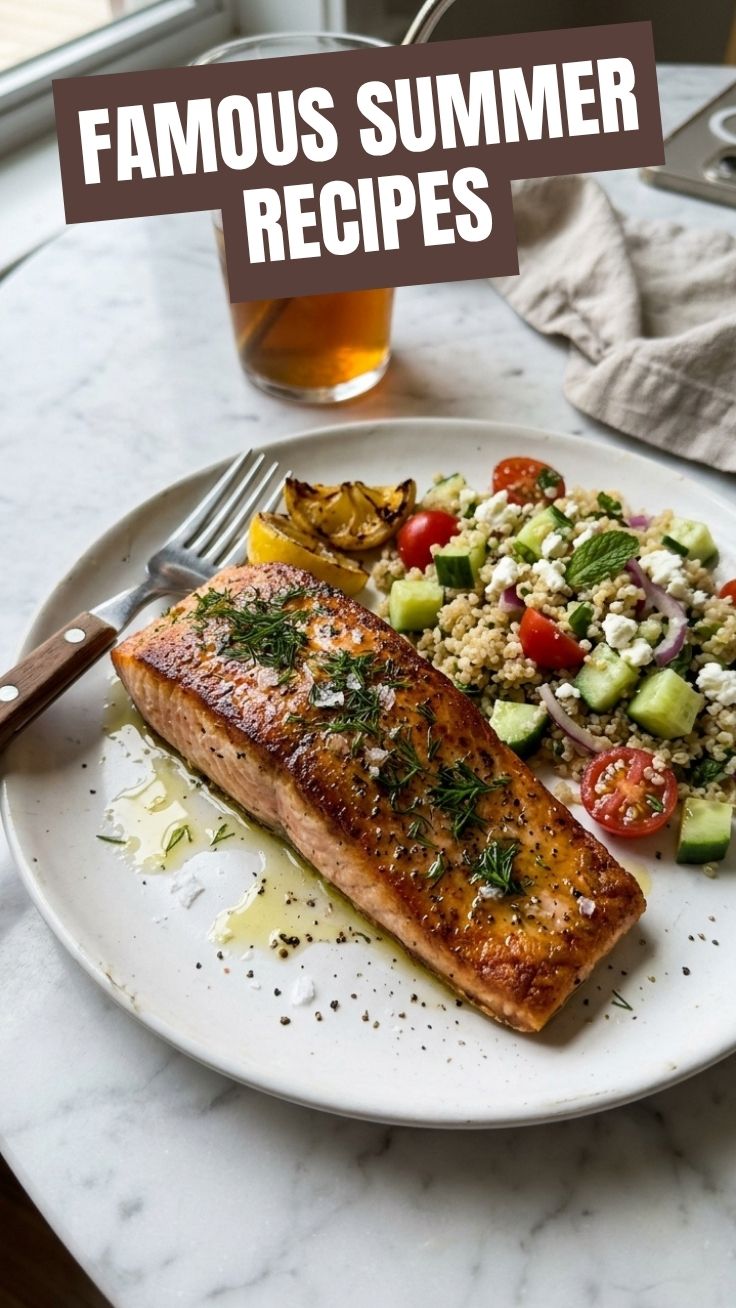
This recipe is designed for maximum flavor with minimal fuss, perfect for those balmy summer evenings.
- Prep Time: 20 minutes (includes chopping veggies, mincing herbs, and preparing the salmon).
- Cook Time: 12-15 minutes (for baking salmon). If grilling, cook times may vary slightly.
- Resting Time: 5 minutes (for the salmon, allows juices to redistribute).
Plan to start your prep about 30-40 minutes before you want to serve. The salmon cooks relatively quickly, so ensure your salad components are ready to go beforehand. This allows for a seamless transition from oven to plate!
Step-by-Step Instructions
Let’s bring this vibrant dish to life!
1. Preheat & Prep Salmon: Preheat your oven to 400°F (200°C). Line a baking sheet with parchment paper. Pat the salmon fillets dry with paper towels. Season generously with salt and pepper. You can also lightly brush with olive oil for extra crispiness.
2. Bake the Salmon: Place the seasoned salmon fillets on the prepared baking sheet. Bake for 12-15 minutes, or until the salmon is cooked through and flakes easily with a fork. Alternatively, if grilling, brush a hot grill with oil and grill skin-side down for 4-6 minutes, then flip and cook for another 3-5 minutes, until done. This step is crucial for delivering those healthy salmon summer recipes we all crave.
3. Prepare the Vinaigrette: While the salmon bakes, in a small bowl, whisk together the olive oil, lemon juice (from 1 lemon), Dijon mustard, honey (if using), and a pinch of salt and pepper until emulsified.
4. Assemble the Salad: In a large mixing bowl, combine the halved cherry tomatoes, diced cucumber, finely sliced red onion, fresh dill, and fresh parsley. Add the mixed greens.
5. Flake and Combine: Once the salmon is cooked, let it rest for a few minutes. Then, gently flake the salmon into bite-sized pieces, removing the skin if desired.
6. Dress and Serve: Add the flaked salmon to the salad bowl with the vegetables and greens. Drizzle the vinaigrette over the salad. Toss gently to combine all ingredients. Serve immediately, perhaps with extra lemon wedges, making this the perfect summer salmon salad experience.
Nutritional Benefits & Advantages
Salmon is a nutritional powerhouse! It’s an excellent source of omega-3 fatty acids, which are crucial for heart health, brain function, and reducing inflammation. It’s also packed with high-quality protein, essential for muscle repair and satiety. Combining it with a medley of fresh vegetables like tomatoes, cucumbers, and leafy greens further boosts the vitamin and mineral content, contributing to a balanced diet rich in antioxidants and fiber. This dish is naturally gluten-free and can easily be made dairy-free, making it suitable for various dietary needs.
Tips, Variations & Cooking Advice
- Flavor Boost: Before baking, try rubbing the salmon with a pinch of garlic powder or smoked paprika for an extra layer of flavor.
- Herb Variations: Experiment with other fresh herbs like mint or basil for a different aromatic profile.
- Add Grains: For a heartier meal, serve this salmon salad over a bed of quinoa, couscous, or with crusty whole-grain bread.
- Creamy Dressing: If you prefer a creamy dressing, add a tablespoon of Greek yogurt or avocado to the vinaigrette.
- Spice It Up: A pinch of red pepper flakes in the dressing can add a pleasant kick.
- Veggie Swaps: Feel free to incorporate other seasonal summer vegetables like corn, bell peppers, or grilled zucchini.
Common Mistakes to Avoid
- Overcooking Salmon: This is the most common mistake! Overcooked salmon becomes dry and tough. Watch for the internal temperature (145°F or 63°C) or when it flakes easily.
- Not Patting Salmon Dry: This prevents the skin from crisping and can lead to a steamed, rather than roasted or grilled, texture.
- Over-Dressing the Salad: Start with half of the dressing and add more as needed. You want the salad to be coated, not swimming.
- Assembling Too Early: Dress the salad just before serving to prevent the greens from wilting and the vegetables from becoming soggy.
- Ignoring Seasoning: Don’t be shy with salt and pepper! They amplify all the other flavors.
Storage & Meal Prep Tips
Leftovers of this salmon salad are fantastic for a quick lunch the next day, though the greens might soften slightly. Store any remaining salad and salmon in separate airtight containers in the refrigerator for up to 2-3 days. If you anticipate leftovers, it’s best to store undressed salad components and cooked salmon separately, and then combine and dress just before eating. Reheat the salmon gently if desired, or enjoy it cold. For meal prep, bake the salmon and chop all the vegetables on Sunday, then assemble individual portions throughout the week.
Conclusion
There you have it—a truly exceptional and easy-to-make dish that highlights how simple it is to create healthy salmon summer recipes right in your own kitchen! This recipe is more than just food; it’s an experience, a celebration of fresh, seasonal ingredients and wholesome cooking. We hope you’re inspired to try this delightful a summer salmon salad and make it a staple in your warm-weather meal rotation. Share your creations and tag us with your amazing results – we can’t wait to see your culinary masterpieces!
FAQs
Q1: Can I use frozen salmon for this recipe?
A1: Yes, absolutely! Just make sure to thaw the salmon thoroughly in the refrigerator overnight before patting it dry and proceeding with the recipe.
Q2: What’s the best way to tell if the salmon is cooked through?
A2: The easiest way is to gently press on the thickest part of the fillet with a fork. If it flakes easily and looks opaque throughout, it’s done. An instant-read thermometer should register 145°F (63°C) at the thickest part.
Q3: Can I make the dressing ahead of time?
A3: Yes, the lemon-dill vinaigrette can be made up to 2-3 days in advance and stored in an airtight container in the refrigerator. Just give it a good whisk or shake before using.
Q4: I don’t like dill. What other herbs can I use?
A4: Fresh parsley, chives, basil, or a combination of these would all work beautifully. Even a touch of fresh mint can add a refreshing twist.
Q5: How can I make this recipe spicier?
A5: Add a pinch of red pepper flakes to the vinaigrette, or even a dash of your favorite hot sauce. You could also include finely diced jalapeño in the salad mix for extra heat.