Craving a Taste of the Mediterranean? Discover the Ultimate Homemade Greek Salad!
Ever found yourself yearning for a dish that’s both vibrantly flavorful and incredibly wholesome? Imagine a symphony of crisp vegetables, briny olives, tangy feta, and a zesty dressing, all coming together in a harmonious blend. This isn’t just a fantasy; it’s the reality of a perfectly crafted Greek Salad. Beyond its tantalizing taste, mastering this classic at home offers an incredible opportunity to embrace the principles of the Mediterranean diet – a lifestyle renowned for its health benefits and delicious simplicity. In a world of complex culinary trends, sometimes the most satisfying meals are the ones that celebrate fresh, quality ingredients, and this recipe delivers exactly that. Preparing your own ensures the freshest produce, customizable portions, and a truly authentic experience that store-bought versions simply can’t match.
Ingredients & Kitchen Tools
To embark on your journey to a spectacular Greek Salad, gather these essentials:
Ingredients:
- 1 large English Cucumber: Seedless and crisp, offering a refreshing crunch.
- 3-4 Ripe Roma Tomatoes: Or any firm, flavorful tomato, diced for sweetness and acidity.
- 1 Green Bell Pepper: Washed, seeded, and finely sliced for a mild, vibrant note.
- 1/2 Red Onion: Thinly sliced or finely diced, adding a pungent kick. Soak in ice water for 10 minutes to reduce sharpness, if desired.
- 1/2 cup Kalamata Olives: Pitted, with their characteristic briny, fruity flavor.
- 4 oz Feta Cheese: Block feta, preferably sheep or goat’s milk, crumbled or cut into cubes for authentic tang.
- 1/4 cup Extra Virgin Olive Oil: High-quality, for the dressing and rich flavor.
- 2 tablespoons Red Wine Vinegar: Essential for the dressing’s characteristic tang.
- 1 teaspoon Dried Oregano: Classic Mediterranean herb, adds aromatic depth.
- 1/2 teaspoon Sea Salt: To taste, enhances all flavors.
- 1/4 teaspoon Freshly Ground Black Pepper: To taste, for a subtle spice.
- Optional Garnish: Fresh parsley, mint leaves, or a sprinkle of sumac.
Kitchen Tools:
- Large Mixing Bowl: For combining all salad ingredients.
- Small Bowl or Jar: For whisking the dressing.
- Sharp Chef’s Knife: For precise chopping and slicing.
- Cutting Board: A stable surface for preparing vegetables.
- Measuring Cups & Spoons: For accurate ingredient quantities.
- Whisk or Fork: To emulsify the dressing.
Prep Time & Cooking Schedule
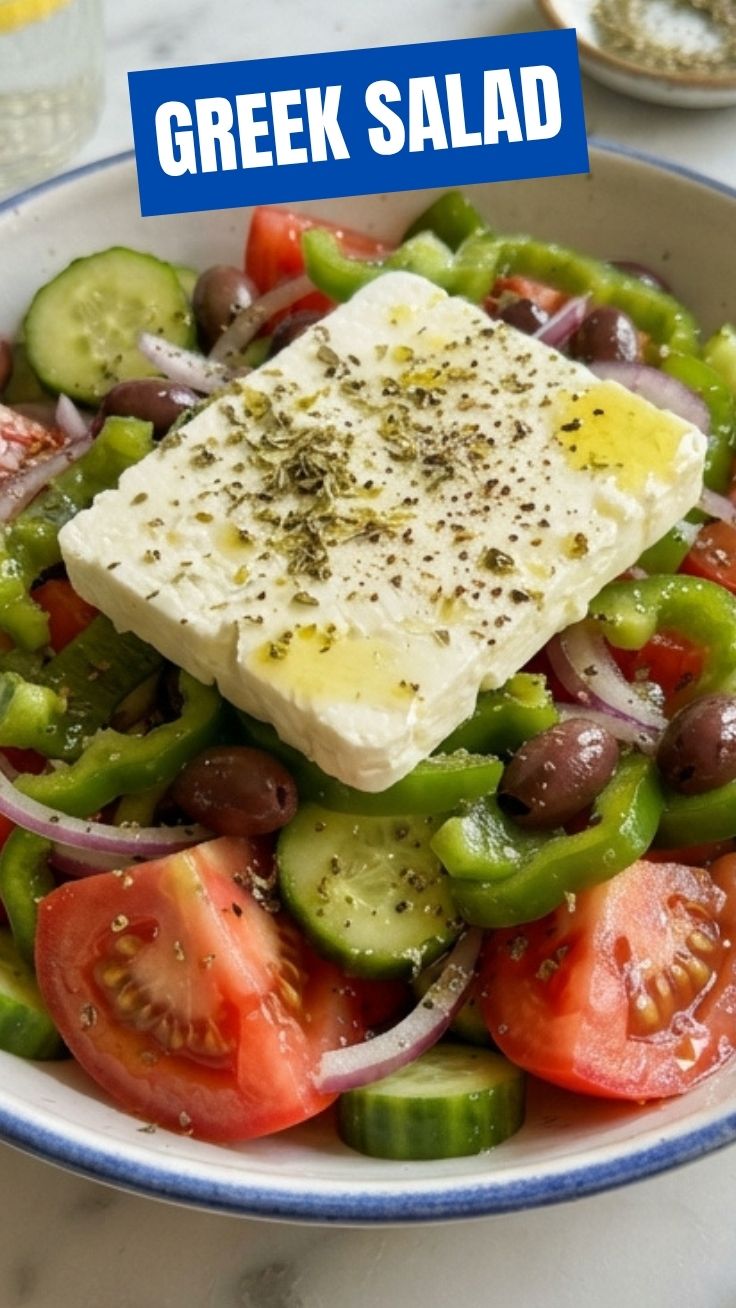
One of the greatest appeals of this vibrant salad is its minimal preparation and absence of cooking. This recipe is perfect for a quick lunch, a light dinner, or a refreshing side dish.
- Prep Time: 15-20 minutes
- Cook Time: 0 minutes
- Resting Time: 10-15 minutes (optional, allows flavors to meld)
For optimal flavor, aim to assemble the salad no more than an hour before serving, or at least let the dressing marinate with the vegetables for 10-15 minutes. This allows the ingredients to absorb the vibrant flavors of the dressing without becoming soggy.
Step-by-Step Instructions
Follow these simple steps to create a truly authentic and delicious Greek Salad that aligns perfectly with the principles of the Mediterranean diet:
1. Prepare the Vegetables: Wash and thoroughly dry all your fresh produce. Dice the cucumber and tomatoes into bite-sized pieces. Thinly slice the green bell pepper and red onion. If using block feta, cut it into small cubes or crumble it.
2. Combine Salad Ingredients: In your large mixing bowl, gently combine the diced cucumber, tomatoes, sliced green bell pepper, sliced red onion, and Kalamata olives.
3. Make the Dressing: In a small bowl or jar, whisk together the extra virgin olive oil, red wine vinegar, dried oregano, sea salt, and black pepper until well combined and slightly emulsified. Taste and adjust seasoning as needed.
4. Dress the Salad: Pour the dressing over the vegetables in the large mixing bowl. Toss gently to ensure all ingredients are evenly coated.
5. Add Feta: Gently fold in the crumbled or cubed feta cheese. Be careful not to over-mix, as the feta can break down too much.
6. Serve: For best results, let the salad sit for 10-15 minutes to allow the flavors to meld. Garnish with fresh herbs if desired, then serve immediately.
Nutritional Benefits & Advantages
This Greek Salad is a powerhouse of nutrition, embodying the core tenets of healthy eating. It’s rich in vitamins, minerals, and antioxidants from the colorful array of fresh vegetables like vitamins A and C. The extra virgin olive oil provides heart-healthy monounsaturated fats, known to reduce bad cholesterol levels. Feta cheese offers calcium and protein. Together, these ingredients contribute to a dish that supports cardiovascular health, provides sustained energy, and aids in digestion. It’s naturally gluten-free and can easily be made vegan by omitting the feta. This salad isn’t just a meal; it’s a celebration of wellness.
Tips, Variations & Cooking Advice
- Add Protein: For a more substantial meal, consider adding grilled chicken, chickpeas, or canned tuna.
- Herb Power: Experiment with fresh herbs like dill or mint for an extra layer of flavor.
- Spice It Up: A pinch of red pepper flakes in the dressing can add a subtle kick.
- Lemon Zest: A little lemon zest in the dressing brightens all the flavors.
- Vegetable Variety: Feel free to add other crisp vegetables like thinly sliced radishes.
- Marinating Onion: As mentioned, soaking sliced red onion in ice water for 10 minutes can significantly reduce its harshness, resulting in a milder flavor.
Common Mistakes to Avoid
- Over-dressing: Start with less dressing and add more if needed. Too much dressing can make the salad soggy.
- Pre-dressing Too Early: Dressing the salad too far in advance can cause the vegetables, especially the tomatoes and cucumber, to release too much water and become limp.
- Skipping Quality Ingredients: The simplicity of this salad means the quality of each ingredient truly shines. Opt for fresh, ripe vegetables and good quality olive oil and feta.
- Uneven Chopping: Aim for uniform sizes for your vegetables so each bite offers a balanced mix of flavors and textures.
Storage & Meal Prep Tips
While best enjoyed fresh, you can store leftover Greek Salad in an airtight container in the refrigerator for up to 2 days. The vegetables may soften slightly, and the dressing might separate; simply give it a gentle toss before serving. For meal prep, store the dressing separately and add it just before serving to maintain crispness. You can chop all the vegetables and keep them in a separate container, adding the feta and dressing right before eating. This ensures maximum freshness and prevents sogginess.
Conclusion
Embracing the delightful simplicity of a homemade Greek Salad is more than just preparing a meal; it’s a step towards a vibrant and healthy lifestyle. This recipe not only delivers on taste but also aligns beautifully with the principles of the Mediterranean diet, making healthy eating both easy and enjoyable. We encourage you to try this recipe, customize it to your liking, and share your delicious results with us! What are your favorite additions to a classic Greek Salad?
FAQs
1. Can I use dried oregano instead of fresh?
Yes, dried oregano is traditional for Greek salad dressing and offers a more concentrated flavor. If using fresh, you’ll need about three times the amount (e.g., 3 teaspoons fresh for 1 teaspoon dried).
2. How can I make this salad vegan?
Simply omit the feta cheese. The salad is still incredibly flavorful and nutritious without it!
3. My red onion is too strong. How can I mellow it out?
Thinly slice the red onion and soak it in a bowl of ice water for 10-15 minutes. This process helps to reduce its pungent flavor. Drain thoroughly before adding to the salad.
4. Can I prepare the dressing ahead of time?
Absolutely! The dressing can be made and stored in an airtight container in the refrigerator for up to a week. Give it a good shake or whisk before using.
5. What’s the best way to keep the salad from getting watery?
Ensure your vegetables are thoroughly dried after washing. Additionally, add the dressing just before serving, or at most 15-20 minutes beforehand, to prevent the vegetables from releasing too much moisture.