Unlock Pure Joy: Crafting the Perfect Homemade Funnel Cake Experience
Ever wondered what it takes to recreate the magic of a carnival treat right in your own kitchen? The crispy, golden exterior giving way to a soft, fluffy interior, dusted with a cloud of powdered sugar – it’s an experience that transcends mere dessert. Today, we’re diving deep into the art of making the perfect Funnel Cake at home. Beyond the nostalgia, preparing this delightful confection yourself allows for complete control over ingredients, ensuring a fresh, wholesome, and truly personalized indulgence. Forget long lines and questionable oil; your journey to a superior funnel cake recipe begins now, promising a culinary adventure that will impress friends and family alike.
Ingredients & Kitchen Tools
Crafting the perfect funnel cake requires a straightforward list of ingredients and a few essential kitchen tools.
- All-Purpose Flour (2 cups): The backbone of our batter, providing structure.
- Granulated Sugar (1/4 cup): For a touch of sweetness within the batter itself.
- Baking Powder (2 teaspoons): Our leavening agent, creating those delightful airy pockets.
- Salt (1/2 teaspoon): A pinch to balance the sweetness and enhance overall flavor.
- Milk (1 1/2 cups): Any kind works, from whole to skim, contributing to the batter’s liquid base.
- Large Eggs (2): Act as binders and add richness.
- Vanilla Extract (1 teaspoon): For aromatic depth and warmth.
- Vegetable Oil (4-6 cups): Or canola oil, for deep frying. Choose an oil with a high smoke point.
- Powdered Sugar (for dusting): The iconic finishing touch.
- Optional Toppings: Fresh berries, chocolate syrup, whipped cream, cinnamon sugar.
Kitchen Tools:
- Large Mixing Bowl: For combining batter ingredients.
- Whisk: To ensure a smooth, lump-free batter.
- Deep Heavy-Bottomed Pot or Dutch Oven: Essential for safe and even deep frying.
- Deep-Fry Thermometer: Crucial for maintaining the ideal oil temperature.
- Funnel: The namesake tool! A standard kitchen funnel with a wide opening (at least 1/2 inch) is perfect. Alternatively, a squeeze bottle or even a zippered plastic bag with a snipped corner can work in a pinch.
- Spider Skimmer or Slotted Spoon: For carefully removing cooked funnel cakes from the hot oil.
- Wire Rack with Paper Towels underneath: For draining excess oil and keeping cakes crispy.
- Measuring Cups and Spoons: For accurate ingredient proportions.
Prep Time & Cooking Schedule
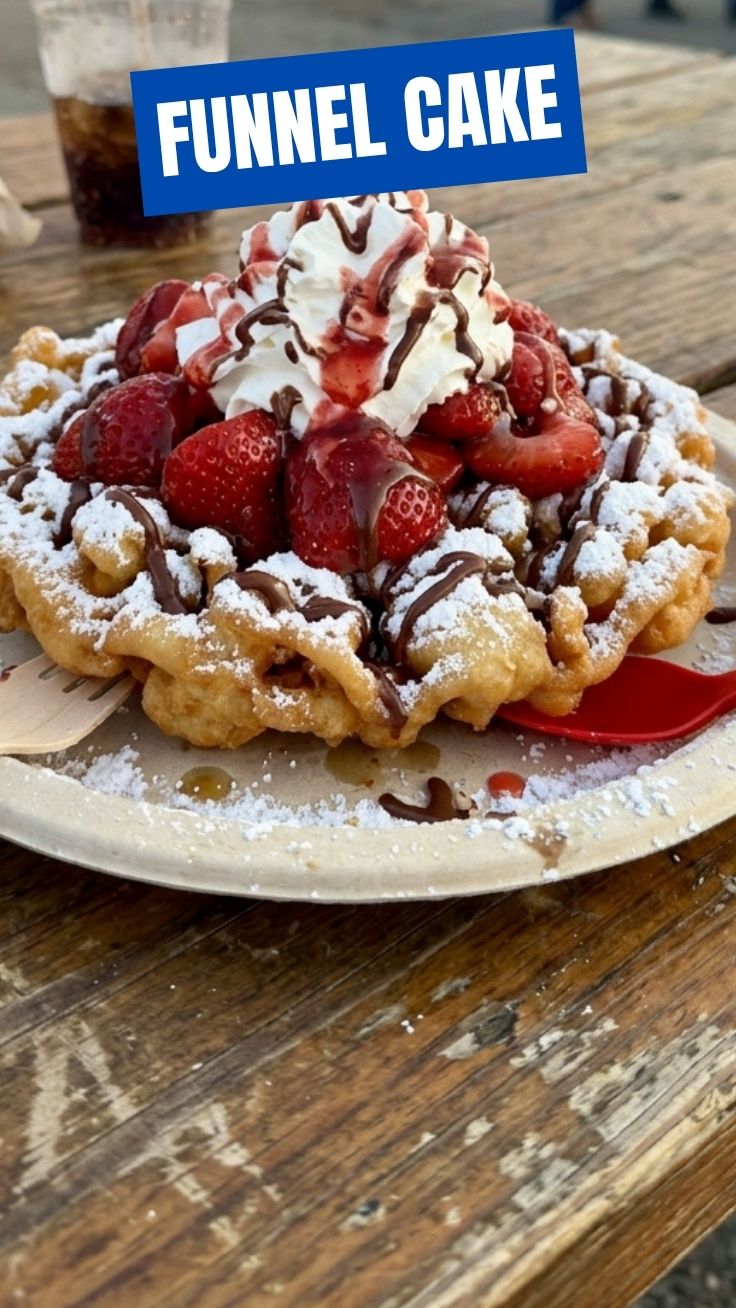
This recipe is relatively quick, making it perfect for an impromptu treat!
- Prep Time: 10 minutes
- Cook Time: 2-3 minutes per funnel cake (total cooking time will depend on how many you make).
- Resting Time: None required for the batter. Ideally, serve immediately after cooking.
Plan to have all your ingredients measured and tools ready before heating the oil. Once the frying starts, it moves quickly! This recipe yields approximately 6-8 medium-sized funnel cakes, depending on how large you make them.
Step-by-Step Instructions
Let’s get frying! Follow these steps closely for a perfectly golden and delicious Funnel Cake.
1. Prepare Your Workstation: In a large mixing bowl, whisk together the flour, granulated sugar, baking powder, and salt. In a separate bowl, whisk together the milk, eggs, and vanilla extract until well combined.
2. Combine Wet and Dry: Gradually add the wet ingredients to the dry ingredients, whisking continuously until you have a smooth batter. It should be thick enough to pour slowly, like pancake batter, but not watery. Avoid overmixing, as this can lead to a tough funnel cake.
3. Heat the Oil: Pour 4-6 cups of vegetable oil into your deep heavy-bottomed pot. Attach your deep-fry thermometer to the side of the pot. Heat the oil over medium-high heat until it reaches 350-375°F (175-190°C). Maintaining this temperature is key to a crispy, non-greasy funnel cake.
4. Prepare for Frying: Place your wire rack over paper towels near your frying station. Have your funnel (or alternative pouring tool) ready.
5. Pour and Fry: Carefully pour about 1/2 cup of batter into the funnel, holding your finger over the opening. Position the funnel several inches above the hot oil. Release your finger and move the funnel in a circular, zigzag, or swirling motion, allowing the batter to stream into the hot oil. Aim for a 6-8 inch diameter.
6. Flip and Cook: Fry for 1-1.5 minutes per side, or until golden brown and crispy. Use your spider skimmer or slotted spoon to carefully flip the funnel cake recipe.
7. Drain and Serve: Once golden on both sides, remove the funnel cake with the spider skimmer, allowing excess oil to drip off for a few seconds. Transfer it to the prepared wire rack.
8. Dust and Enjoy: Generously dust with powdered sugar while still warm. Repeat with remaining batter.
Nutritional Benefits & Advantages
While a funnel cake is undeniably a treat, there are slight advantages to making it at home. You control the quality of the oil, eliminating trans fats often found in commercial preparations. Using fresh, whole ingredients ensures no artificial preservatives or flavors. If you opt for whole wheat flour (for part of it) or reduce the sugar, you can marginally boost its nutritional profile with fiber, though it remains a delightful indulgence best enjoyed in moderation. Paired with fresh fruit toppings, it offers a more balanced dessert experience.
Tips, Variations & Cooking Advice
- Consistency is Key: If your batter is too thick, add a tablespoon of milk at a time until it’s pourable. If it’s too thin, whisk in a tablespoon of flour.
- Temperature Control: A deep-fry thermometer is your best friend. If the oil is too cool, the funnel cakes will be greasy; if too hot, they’ll burn before cooking through.
- Flavor Variations:
* Cinnamon Sugar: Mix 1/4 cup sugar with 1 teaspoon ground cinnamon for dusting.
* Nutmeg: Add 1/2 teaspoon ground nutmeg to the dry ingredients for a warm, spiced flavor.
* Citrus Zest: Include 1 teaspoon of lemon or orange zest in the batter for a bright note.
- Dietary Adaptations:
* Gluten-Free: Substitute all-purpose flour for a 1:1 gluten-free baking blend that contains xanthan gum.
* Dairy-Free: Use almond milk or soy milk instead of regular milk.
- Smaller Portions: Make mini funnel cakes for bite-sized treats by pouring smaller amounts of batter.
Common Mistakes to Avoid
- Overmixing the Batter: This develops gluten, leading to a tough and chewy funnel cake instead of light and tender. Mix just until combined.
- Oil Temperature Fluctuations: Inconsistent oil temp is the enemy of a good fry. Keep a close eye on your thermometer and adjust heat as needed.
- Overcrowding the Pot: Frying too many funnel cakes at once will drop the oil temperature, resulting in greasy results. Fry one or two at a time, depending on your pot size.
- Not Draining Properly: Don’t skip the wire rack. It allows air to circulate, preventing sogginess and ensuring crispiness.
- Dusting When Cold: Powdered sugar adheres best to warm funnel cakes. Dust immediately after removing from the oil.
Storage & Meal Prep Tips
Funnel cakes are best enjoyed immediately after frying, while still warm and crispy. Their delicate texture doesn’t hold up well to extended storage or reheating.
- Refrigeration: Not recommended. They will become soggy and lose their crispy texture.
- Freezing: Not recommended.
- Meal Prep: While you can’t meal prep the cooked funnel cakes, you can prepare the dry and wet ingredients separately a day ahead. Store the dry mix in an airtight container and the wet mix (excluding baking powder if added) in the refrigerator. Combine just before frying for freshest results.
Conclusion
Embarking on the journey to create homemade Funnel Cake is more than just baking; it’s crafting a memory. With just a few simple steps, you can master this beloved carnival classic, bringing smiles and deliciousness to your home. By following this comprehensive funnel cake recipe, you’ve gained the confidence to whip up these airy, sweet delights anytime the craving strikes. Don’t hesitate – give it a try this weekend and share your golden creations with us! We’d love to hear about your culinary adventures in the comments below.
FAQs
Q1: Can I make the batter ahead of time?
A1: You can mix the dry ingredients and wet ingredients separately the day before, but it’s best to combine them just before frying to ensure the baking powder is most effective, resulting in the lightest texture.
Q2: What if I don’t have a funnel?
A2: No problem! A large squeeze bottle (like those used for condiments) or even a sturdy zippered plastic bag with a small corner snipped off will work perfectly for pouring the batter into the hot oil.
Q3: My funnel cakes are coming out greasy. What’s wrong?
A3: The most common culprit is oil that isn’t hot enough. Make sure your oil temperature is consistently between 350-375°F (175-190°C). Also, ensure you don’t overcrowd the pot, which can lower the oil temperature.
Q4: Can I reuse the frying oil?
A4: Yes, after it cools completely, strain the oil through a fine-mesh sieve or cheesecloth to remove any batter bits. Store it in an airtight container in a cool, dark place for future frying sessions. It can typically be reused 1-2 more times for similar purposes.
Q5: What are some alternative toppings besides powdered sugar?
A5: The possibilities are endless! Try chocolate syrup, caramel sauce, fresh fruit (strawberries, blueberries, peaches), whipped cream, a scoop of vanilla ice cream, cinnamon sugar, or fruit preserves for a delightful twist.