Mastering the Homemade Falafel Bowl: A Journey to Culinary Delight
Ever dreamt of capturing the vibrant flavors of the Middle East in your own kitchen? Preparing a homemade Falafel Bowl isn’t just about cooking; it’s an experience that brings you closer to authentic Mediterranean Food with fresh, wholesome ingredients. This delightful dish offers a perfect balance of crispy falafels, fresh vegetables, and tangy dressing, making it a fantastic, nutritious meal. Beyond the undeniable deliciousness, making your own falafel bowls ensures you control the quality of ingredients, customize flavors to your liking, and avoid unhealthy additives often found in takeout options. Get ready to transform your culinary routine with this incredibly rewarding and easy-to-follow recipe.
Ingredients & Kitchen Tools
Crafting the perfect falafel bowl requires a thoughtful selection of fresh ingredients and a few essential kitchen tools.
- For the Falafels:
* 1 can (15 oz) chickpeas, drained and rinsed: The foundation of our crispy falafels.
* ½ cup fresh parsley, chopped: Adds a vibrant green color and fresh, herbaceous flavor.
* ½ cup fresh cilantro, chopped: Complements the parsley with a distinct, aromatic note.
* ¼ cup red onion, roughly chopped: Provides a pungent kick.
* 2-3 cloves garlic, minced: Essential for that classic falafel aroma.
* 1 teaspoon ground cumin: Earthy and warm, a cornerstone spice.
* ½ teaspoon ground coriander: Adds a citrusy, sweet undertone.
* ¼ teaspoon cayenne pepper (optional): For a touch of heat.
* Salt and black pepper to taste: Seasoning is key!
* 2 tablespoons all-purpose flour (or gluten-free blend): Helps bind the falafel mixture.
* Oil for frying (vegetable, canola, or sunflower): For achieving that golden, crispy exterior.
- For the Bowl Assembly:
* Mixed greens or shredded lettuce: A fresh, crisp base.
* Cherry tomatoes, halved: Juicy bursts of sweetness.
* Cucumber, diced: Cool and refreshing.
* Red onion, thinly sliced (for topping): Adds a sharp bite.
* Pita bread or warm flatbread: For scooping or wrapping.
* Hummus: Creamy and savory, a perfect pairing.
* Pickled turnips or red cabbage (optional): For a tangy crunch.
- For the Lemon-Tahini Dressing:
* ½ cup tahini: Rich, nutty paste.
* ¼ cup fresh lemon juice: Bright and zesty.
* 2-3 tablespoons cold water: To thin to desired consistency.
* 1 clove garlic, minced (optional): For an extra layer of flavor.
* Salt to taste: Balances the flavors.
- Kitchen Tools:
* Food processor: Essential for quickly blending falafel ingredients.
* Large mixing bowl: For combining ingredients.
* Deep skillet or Dutch oven: For frying falafels.
* Slotted spoon or spider: For safely removing falafels from hot oil.
* Parchment paper-lined plate or cooling rack: For draining excess oil.
* Measuring cups and spoons: For accurate ingredient portions.
* Whisk: For making the dressing.
Prep Time & Cooking Schedule
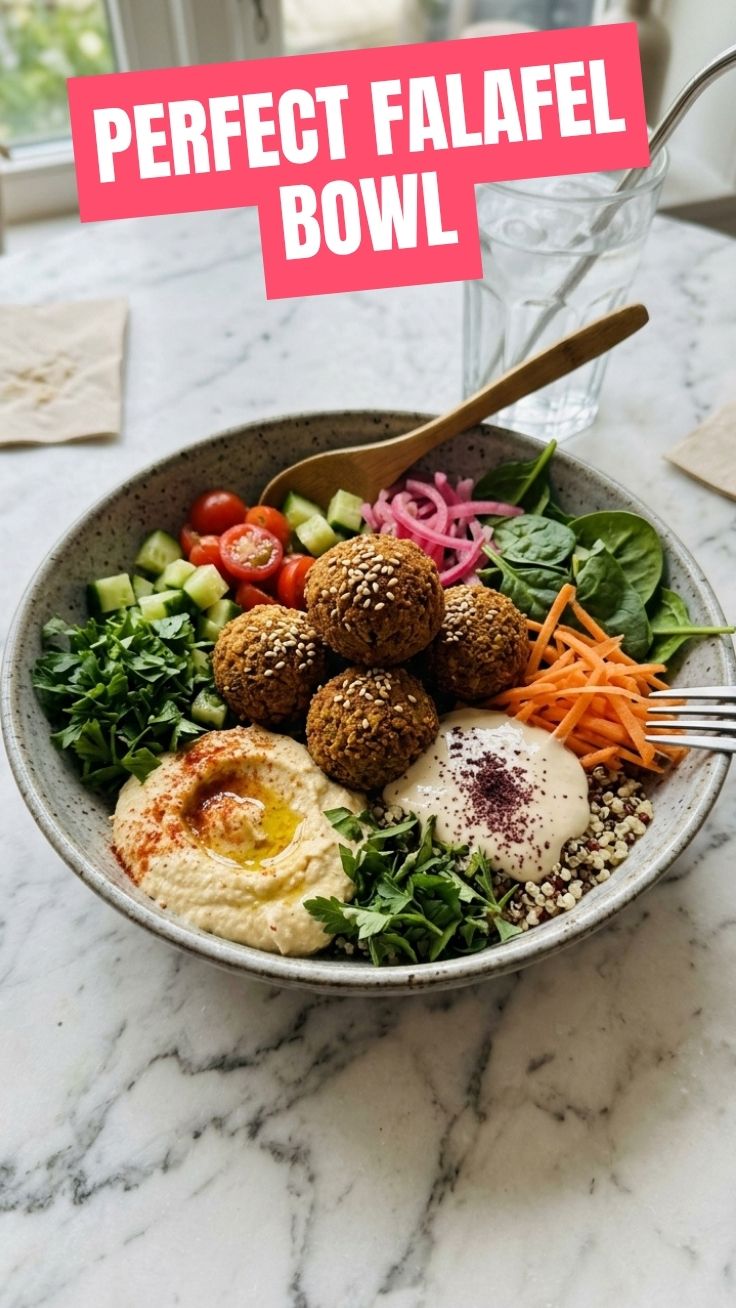
This recipe prioritizes freshness and efficiency, making it perfect for a satisfying weeknight meal or an impressive weekend spread.
- Prep Time: 20 minutes (for falafel mixture, chopping veggies, and dressing).
- Chilling Time (Falafel Mixture): 30 minutes (recommended for easier handling).
- Cooking Time: 15-20 minutes (for frying falafels).
- Total Time: Approximately 1 hour 5 minutes.
Plan to start by preparing the falafel mixture and letting it chill while you chop your vegetables and prepare the dressing. This streamlines the process and ensures everything is ready simultaneously for assembly.
Step-by-Step Instructions
1. Prepare the Falafel Mixture: In a food processor, combine drained chickpeas, parsley, cilantro, red onion, garlic cloves, cumin, coriander, cayenne pepper (if using), salt, and black pepper. Pulse until the mixture is well combined but still has some texture – avoid making it a smooth paste. Transfer the mixture to a large bowl, stir in the flour, and mix well. Cover and refrigerate for at least 30 minutes. This allows the flavors to meld and the mixture to firm up, making it easier to form.
2. Form the Falafels: Once chilled, take small portions of the mixture (about 1.5-2 tablespoons) and roll them into balls or small patties. You should get about 12-15 falafels.
3. Prepare the Dressing: While the falafels are chilling, whisk together the tahini, lemon juice, minced garlic (if using), and salt in a small bowl. Gradually add cold water, starting with 2 tablespoons, and whisk until the dressing reaches a smooth, pourable consistency. Add more water as needed.
4. Fry the Falafels: Heat about 1.5-2 inches of oil in a deep skillet or Dutch oven over medium-high heat until it reaches 350-375°F (175-190°C). Carefully add a few falafels at a time, ensuring not to overcrowd the pan. Fry for 3-5 minutes, turning occasionally, until golden brown and crispy on all sides. Use a slotted spoon to transfer the cooked falafels to a parchment paper-lined plate or a wire rack to drain excess oil. These crispy delights are the heart of your homemade Falafel Bowl, showcasing the best of authentic Mediterranean Food.
5. Assemble Your Bowl: Divide the mixed greens or shredded lettuce among serving bowls. Arrange the crispy falafels, cherry tomatoes, diced cucumber, and thinly sliced red onion on top. Add a generous dollop of hummus and any optional toppings like pickled turnips. Drizzle generously with the lemon-tahini dressing. Serve immediately with warm pita bread or flatbread.
Nutritional Benefits & Advantages
The homemade falafel bowl is a powerhouse of nutrition. Chickpeas are an excellent source of plant-based protein and fiber, promoting satiety and digestive health. The fresh vegetables contribute a wealth of vitamins, minerals, and antioxidants, while healthy fats from tahini and olive oil (if using) support brain function and nutrient absorption. This dish is naturally vegetarian and can easily be made gluten-free by using gluten-free flour for the falafels and serving with gluten-free flatbread. It’s a balanced, wholesome meal that fuels your body with goodness.
Tips, Variations & Cooking Advice
- Baking Option: For a lighter alternative, you can bake the falafels. Preheat your oven to 400°F (200°C). Place the formed falafels on a baking sheet lined with parchment paper, lightly brush with oil, and bake for 20-25 minutes, flipping halfway, until golden brown.
- Flavor Boosts: Add a pinch of smoked paprika or sumac to your falafel mixture for an extra layer of authentic flavor.
- Dressing Variations: Experiment with adding a touch of maple syrup or honey to your tahini dressing for a hint of sweetness, or a pinch of sumac for a lemony tang.
- Protein Boost: While falafels are already protein-rich, you can add grilled halloumi cheese or a sprinkle of toasted nuts for extra protein and texture.
- Spice Level: Adjust the amount of cayenne pepper in the falafel mixture to suit your preferred spice level.
Common Mistakes to Avoid
- Over-processing the Falafel Mixture: Pulsing too much results in a paste-like texture, leading to dense falafels. Aim for a slightly coarse, crumbly mixture.
- Not Chilling the Mixture: Skipping the chilling step makes the falafel mixture difficult to handle and prone to falling apart during frying.
- Overcrowding the Pan: Frying too many falafels at once lowers the oil temperature, resulting in greasy falafels that don’t crisp up properly. Fry in batches.
- Not Enough Oil: Ensure there’s enough oil for the falafels to be at least half-submerged, allowing for even cooking and browning.
- Using Canned Chickpeas Directly: While this recipe uses canned chickpeas, traditionally, falafels are made from dried chickpeas soaked overnight. If you prefer the authentic method, soak dried chickpeas, but do NOT cook them before blending.
Storage & Meal Prep Tips
- Cooked Falafels: Store leftover cooked falafels in an airtight container in the refrigerator for up to 3-4 days. Reheat in an oven or air fryer at 350°F (175°C) for 5-7 minutes to regain crispiness.
- Falafel Mixture: The uncooked falafel mixture can be stored in an airtight container in the refrigerator for up to 2 days.
- Dressing: The lemon-tahini dressing can be stored in a sealed jar in the refrigerator for up to 5-7 days. It may thicken; simply whisk in a little cold water to loosen before serving.
- Vegetables: Prep your vegetables ahead of time and store them separately in airtight containers in the refrigerator.
- Meal Prep: For convenient meal prep, cook a batch of falafels, prepare the dressing, and chop your vegetables on the weekend. Assemble individual bowls just before serving for fresh, easy lunches or dinners throughout the week.
Conclusion
Creating your own Falafel Bowl at home is a rewarding journey into the heart of Mediterranean Food. With its crispy falafel, fresh vibrant vegetables, and zesty tahini dressing, this dish offers an exquisite balance of flavors and textures, promising a meal that is both satisfying and incredibly nutritious. By following these steps, you’ll not only master a classic recipe but also gain the confidence to explore and personalize your culinary creations. Don’t hesitate—dive into the flavorful world of homemade falafels and share your delightful results with us!
FAQs
Q1: Can I make the falafel mixture ahead of time?
A1: Yes, you can prepare the falafel mixture up to 2 days in advance and store it covered in the refrigerator. This can be great for meal prepping!
Q2: What’s the best way to reheat leftover falafels to keep them crispy?
A2: Reheat falafels in an oven or air fryer at 350°F (175°C) for 5-7 minutes (or until heated through) to restore their crispiness. Microwaving them will make them soft.
Q3: Can I use different beans for falafels?
A3: While chickpeas are traditional, some recipes use fava beans or a combination of chickpeas and fava beans. However, for a classic falafel texture and taste, chickpeas are recommended.
Q4: How can I make this recipe gluten-free?
A4: Simply substitute the all-purpose flour in the falafel mixture with a gluten-free all-purpose flour blend. Ensure your pita bread or flatbread is also gluten-free.
Q5: My tahini dressing is too thick/too thin. How can I fix it?
A5: If your dressing is too thick, gradually whisk in small amounts of cold water until it reaches your desired consistency. If it’s too thin, add a teaspoon more of tahini and whisk well.