The Ultimate Guide to Crafting Delectable Cornbread Dressing
Ever wondered what makes a holiday meal truly unforgettable, or a Sunday supper instantly comforting? The secret often lies in the sides, and few dishes capture the essence of homegrown goodness quite like a perfectly executed Cornbread Dressing. This cherished classic, often paired with succulent roasts or festive turkeys, isn’t just a side dish; it’s a culinary hug, a tradition, and a celebration of flavors. And while store-bought versions exist, nothing compares to the rich, savory depth of a homemade dressing, especially one built upon the golden perfection of Southern cornbread. This guide will walk you through every step, ensuring your dressing is the star of any spread.
Ingredients & Kitchen Tools
Gather your culinary arsenal! Here’s what you’ll need to create this masterful dressing:
- For the Southern cornbread:
* 1 ½ cups cornmeal (fine or medium grind, for authentic texture)
* 1 ½ cups all-purpose flour (balances the cornmeal’s robustness)
* 1 ½ tablespoons baking powder (for lift and tenderness)
* 1 teaspoon salt (enhances overall flavor)
* 2 large eggs (binder and richness)
* 1 ½ cups buttermilk (acidity reacts with baking powder for lightness)
* ½ cup unsalted butter, melted (moisture and buttery flavor)
Optional substitution:* 1 ½ cups whole milk + 1 ½ tablespoons lemon juice/vinegar (for DIY buttermilk)
- For the Dressing:
* 1 large yellow onion, finely diced (aromatic foundation)
* 2 stalks celery, finely diced (adds crunch and freshness)
* 1 large green bell pepper, finely diced (sweetness and vibrant color)
* ½ cup unsalted butter (for sautéing and richness)
* 6 cups crumbled cornbread (from your freshly baked batch!)
* 3 cups chicken or turkey broth, warm (moisture and savory depth)
* 2 large eggs, beaten (binder for texture)
* 1 tablespoon fresh sage, minced (classic earthy flavor)
* 1 teaspoon fresh thyme, minced (subtle aromatic note)
* ½ teaspoon black pepper (mild spice)
* Pinch of cayenne pepper (optional, for a slight kick)
* Salt to taste (seasoning)
- Kitchen Tools:
* Large mixing bowls
* Large cast-iron skillet or 9×13 inch baking dish (for baking cornbread and dressing)
* Whisk
* Measuring cups and spoons
* Sharp knife & cutting board
* Large sauté pan
* Spatula
Prep Time & Cooking Schedule
- Active Prep Time: 30 minutes (for cornbread and vegetable chopping)
- Cornbread Bake Time: 20-25 minutes
- Dressing Assemble Time: 15 minutes
- Dressing Bake Time: 35-45 minutes
- Resting Time: 10 minutes (after baking, allows flavors to meld and structure to set)
This recipe can be broken down: bake the cornbread a day ahead to allow it to cool and dry slightly, which is ideal for crumbling and preventing a soggy dressing.
Step-by-Step Instructions
1. For the Southern cornbread: Preheat your oven to 400°F (200°C). Grease a cast-iron skillet or 9×13 inch baking dish. In a large bowl, whisk together cornmeal, flour, baking powder, and salt. In another bowl, combine eggs, buttermilk, and melted butter. Pour the wet ingredients into the dry, mixing until just combined; do not overmix. Pour into the prepared pan and bake for 20-25 minutes, or until golden brown and a toothpick inserted into the center comes out clean. Let cool completely, then crumble into a large bowl.
2. Sauté the Aromatics: In a large sauté pan, melt ½ cup of butter over medium heat. Add the diced onion, celery, and green bell pepper. Sauté for 8-10 minutes, or until softened and fragrant but not browned.
3. Combine & Season: Add the softened vegetables to the crumbled cornbread. Pour in the warm chicken or turkey broth, beaten eggs, fresh sage, fresh thyme, black pepper, and cayenne pepper (if using). Mix gently until all ingredients are thoroughly combined. The mixture should be moist but not soupy. Taste and adjust salt as needed.
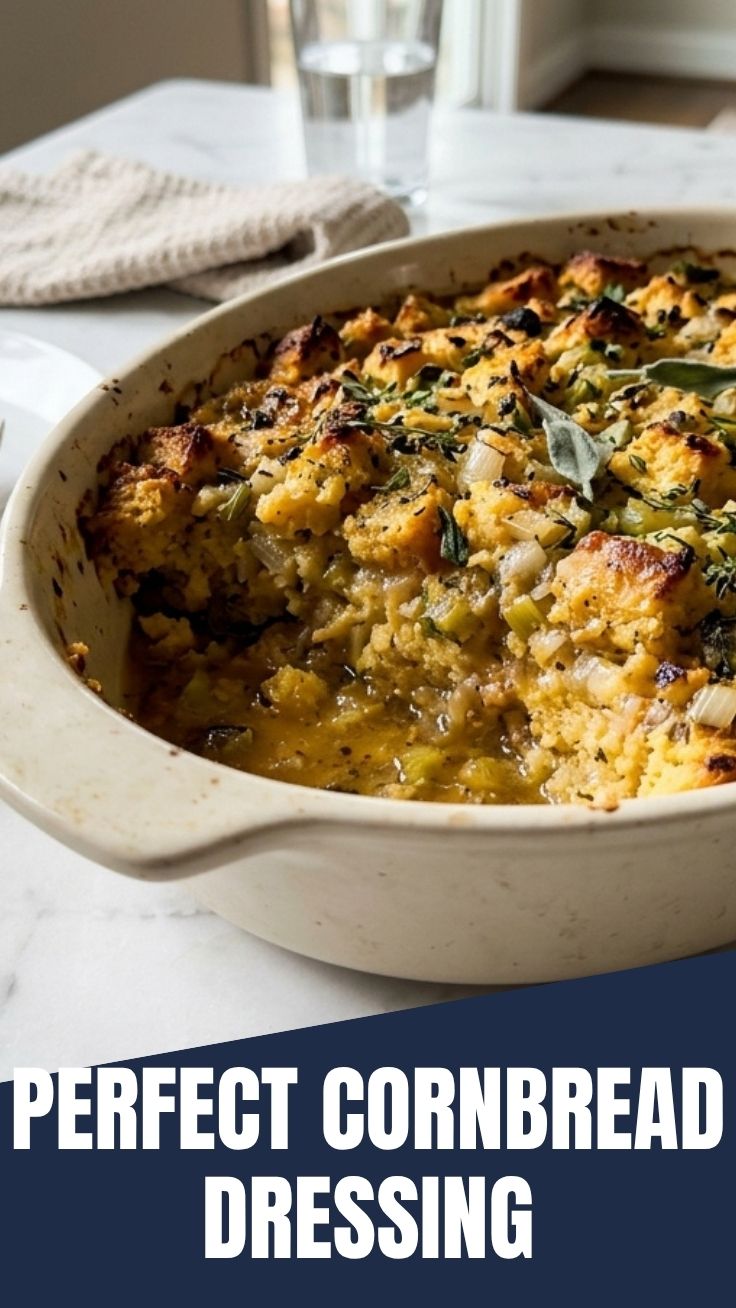
4. Bake the Cornbread Dressing: Transfer the mixture to a greased 9×13 inch baking dish. Bake at 375°F (190°C) for 35-45 minutes, or until the top is golden brown and the edges are bubbling. For a crispier top, you can broil for the last 2-3 minutes, watching carefully to prevent burning.
5. Rest and Serve: Remove from the oven and let rest for at least 10 minutes before serving. This allows the dressing to set and makes for easier scooping.
Nutritional Benefits & Advantages
Beyond its incredible taste, homemade Cornbread Dressing offers several advantages. Cornmeal provides dietary fiber, aiding digestion, while the vegetables contribute essential vitamins and minerals like Vitamin C and potassium. Using homemade broth adds collagen and amino acids, and by controlling the ingredients, you can reduce sodium and unhealthy fats often found in store-bought versions. It’s a comforting dish that, when made with mindful ingredients, can be a nourishing part of a balanced meal.
Tips, Variations & Cooking Advice
- Add Sausage or Oysters: For a heartier dressing, brown 1 lb of breakfast sausage or sauté 1 cup of shucked oysters with the vegetables.
- Herb Variations: Experiment with dried herbs like poultry seasoning, or add fresh parsley for a brighter note.
- Spice It Up: A dash of red pepper flakes or a hotter pepper like jalapeño can add a zesty kick.
- Gluten-Free: Use a gluten-free cornmeal blend and ensure all other ingredients are certified GF.
- Dairy-Free: Substitute buttermilk with a non-dairy milk alternative (like almond or soy milk with a splash of vinegar) and use dairy-free butter.
- Consistency Control: If your dressing seems too dry, add a little more broth. If too wet, bake a little longer or add a tablespoon of flour.
Common Mistakes to Avoid
- Soggy Dressing: This usually happens from either too much liquid or not crumbling the cornbread sufficiently, preventing proper absorption. Ensure cornbread is cooled and firm before crumbling.
- Dry Dressing: Not enough liquid or overbaking are the culprits here. Keep an eye on it during baking.
- Lack of Flavor: Don’t skimp on sautéing the aromatics properly; this builds the flavor foundation. Always taste and adjust seasoning.
- Overmixing: Especially when making the cornbread, overmixing develops the gluten too much, leading to a tough texture.
Storage & Meal Prep Tips
Leftover Cornbread Dressing can be stored in an airtight container in the refrigerator for up to 3-4 days. For longer storage, it freezes beautifully for up to 3 months. To reheat, thaw in the refrigerator overnight if frozen, then warm in a preheated oven at 350°F (175°C) until heated through, about 15-20 minutes, covering with foil to prevent drying out. A splash of extra broth can help revive its moisture.
Conclusion
Crafting your own Cornbread Dressing from scratch, especially by starting with a homemade Southern cornbread, is a rewarding culinary journey that pays off in unparalleled flavor and satisfaction. This guide empowers you to create a dish that’s not just a side, but a centerpiece of comfort and tradition. Dive in, experiment with the variations, and delight in the warmth of this timeless recipe. Share your creations in the comments below, or tell us your favorite dressing traditions!
FAQs
Q1: Can I make the cornbread ahead of time?
A1: Yes, absolutely! Baking the cornbread a day or two in advance allows it to dry out slightly, which is ideal for achieving the perfect dressing texture.
Q2: What kind of broth should I use?
A2: Chicken or turkey broth works best. Using low-sodium broth allows you to control the saltiness of the final dish.
Q3: My dressing seems a bit dry after baking. What went wrong?
A3: This often means it was overbaked or didn’t have enough liquid initially. For reheating, a splash of broth will help restore moisture.
Q4: Can I add other vegetables?
A4: Definitely! Mushrooms, bell peppers of different colors, or even sautéed spinach can be excellent additions for extra flavor and nutrients.
Q5: How do I get a crispy top on my dressing?
A5: For a crispy golden-brown top, bake uncovered for the last 15-20 minutes, or use the broiler for a few minutes at the very end, watching carefully to prevent burning.