Mastering the Art of the Perfect Peach Pound Cake at Home
Ever dreamed of baking a dessert that’s both comforting and elegant, bursting with the sweet, juicy essence of summer? Look no further than the Peach Pound Cake. This classic, rich, and moist cake represents the epitome of home baking, offering a delightful experience that packaged alternatives simply can’t match. Preparing this exquisite pound cake ourselves allows for complete control over the ingredients, ensuring a wholesome, flavorful treat free from artificial additives. Plus, there’s an undeniable satisfaction in presenting a homemade creation. And if this particular recipe sparks your curiosity for more, exploring various peach cake recipes can open up a world of delightful possibilities.
Ingredients & Kitchen Tools
For a truly sublime Peach Pound Cake, gather these essentials:
- Unsalted Butter (2 sticks/1 cup): Softened to room temperature for a smooth, homogenous batter.
- Granulated Sugar (2 cups): Provides sweetness and helps create a tender crumb.
- Large Eggs (4): Room temperature eggs emulsify better, contributing to a rich texture.
- All-Purpose Flour (3 cups): Sifted to prevent lumps and ensure a light texture.
- Baking Powder (1 teaspoon): A leavening agent that helps the cake rise.
- Salt (1/2 teaspoon): Enhances overall flavor.
- Whole Milk (1 cup): Room temperature for optimal consistency.
- Vanilla Extract (2 teaspoons): Adds a warm, aromatic depth.
- Fresh Peaches (2-3 medium): Ripe, peeled, pitted, and diced into small pieces (about 1.5 cups). Frozen peaches can be used but drain well.
- Optional: Lemon Zest (1 tablespoon): Brightens the flavor profile.
- Optional: Powdered Sugar (for dusting): For a simple, elegant garnish.
Kitchen Tools:
- 9×5 inch Loaf Pan or Bundt Pan: Greased and floured thoroughly to prevent sticking.
- Electric Mixer (stand or hand-held): Essential for creaming butter and sugar effectively.
- Large Mixing Bowls (2): For wet and dry ingredients.
- Rubber Spatula: For folding and scraping.
- Wire Rack: For cooling the cake completely.
- Measuring Cups and Spoons: For precise ingredient measurements.
Prep Time & Cooking Schedule
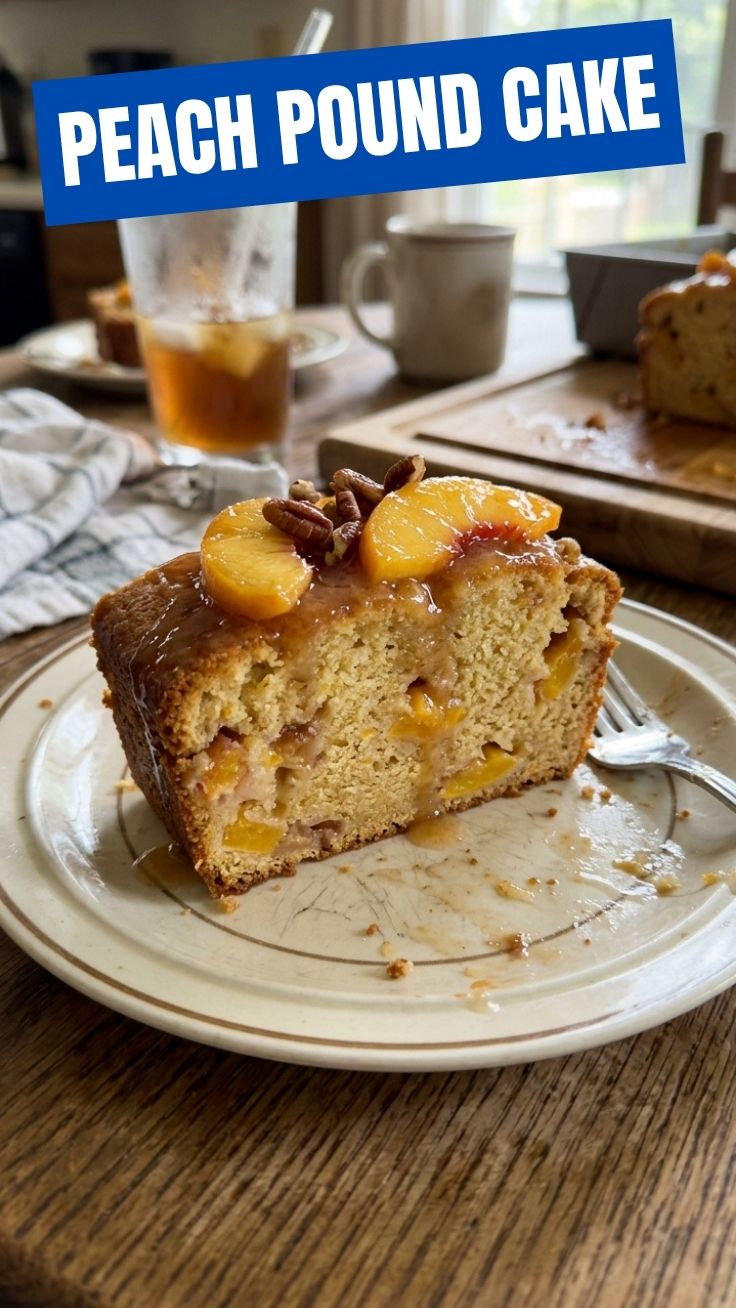
- Prep Time: 20-25 minutes (includes peeling and dicing peaches).
- Cook Time: 60-75 minutes, depending on your oven and pan size.
- Resting Time: 15-20 minutes in the pan after baking, then at least 1 hour on a wire rack to cool completely before slicing. This allows the cake to set and prevents crumbling. Plan to start baking well in advance of when you plan to serve it.
Step-by-Step Instructions
1. Preheat & Prepare: Preheat your oven to 325°F (160°C). Grease and flour your loaf or Bundt pan meticulously. This crucial step ensures a clean release.
2. Cream Butter & Sugar: In a large mixing bowl, using an electric mixer, cream together the softened butter and granulated sugar on medium-high speed until light and fluffy, about 5-7 minutes. This incorporates air, contributing to the cake’s tender texture.
3. Add Eggs: Add the eggs one at a time, beating well after each addition. Scrape down the sides of the bowl to ensure everything is fully incorporated.
4. Combine Dry Ingredients: In a separate medium bowl, whisk together the all-purpose flour, baking powder, and salt. If using lemon zest, whisk it into the dry ingredients as well.
5. Alternate Wet & Dry: Gradually add the dry ingredients to the butter mixture, alternating with the whole milk, beginning and ending with the dry ingredients. Mix on low speed until just combined. Be careful not to overmix, as this can lead to a tough cake.
6. Fold in Vanilla & Peaches: Stir in the vanilla extract. Gently fold in the diced fresh peaches with a rubber spatula until evenly distributed throughout the batter. Your batter for this delightful Peach Pound Cake is now ready.
7. Bake: Pour the batter into your prepared pan and smooth the top. Bake for 60-75 minutes, or until a wooden skewer inserted into the center comes out clean. The exact baking time can vary, so monitor closely.
8. Cool: Let the pound cake cool in the pan for 15-20 minutes before carefully inverting it onto a wire rack to cool completely. For those exploring other delicious peach cake recipes, remember that proper cooling is key to a perfect texture.
Nutritional Benefits & Advantages
Peaches, the star ingredient, are a good source of Vitamin C, an antioxidant that supports immune health, and Vitamin A, essential for vision. They also provide dietary fiber, aiding digestion and promoting a feeling of fullness. While this is a dessert, the inclusion of real fruit adds a touch of natural sweetness and nutritional value compared to highly processed alternatives. Making it at home also allows you to control sugar content to some extent.
Tips Variations & Cooking Advice
- Flavor Boosts: Add a pinch of cinnamon or nutmeg to the dry ingredients for a warm spice note. A tablespoon of almond extract can also complement the peaches beautifully.
- Glaze It: A simple powdered sugar glaze (powdered sugar whisked with a little milk and vanilla) adds an extra layer of sweetness and elegance.
- Mini Cakes: Bake in mini loaf pans for individual servings (adjust baking time accordingly).
- Grilling Peaches: For an extra layer of flavor, lightly grill sliced peaches before dicing and incorporating them into the batter.
- Gluten-Free: Substitute all-purpose flour with a 1:1 gluten-free baking blend that contains xanthan gum.
- Dairy-Free: Use a plant-based milk alternative (almond or oat milk works well) and a dairy-free butter substitute.
Common Mistakes to Avoid
- Overmixing the Batter: This develops gluten excessively, resulting in a tough, dense cake. Mix until just combined.
- Using Cold Ingredients: Cold butter and eggs don’t emulsify well, leading to a lumpy batter and a less even crumb. Ensure they are at room temperature.
- Not Greasing and Flourishing Properly: This is a recipe for a stuck cake. Be thorough!
- Opening the Oven Door Too Early: Resist the temptation. This can cause the cake to collapse, especially in the early stages of baking.
- Not Cooling Completely: Slicing a warm pound cake can lead to crumbling and a less defined texture. Patience is a virtue here.
Storage & Meal Prep Tips
Store leftover Peach Pound Cake tightly wrapped in plastic wrap or in an airtight container at room temperature for up to 3-4 days. For longer storage, slices can be individually wrapped and frozen for up to 2-3 months. Thaw frozen slices at room temperature or gently warm in the microwave. Reheating a slice briefly can bring back some of its original warmth and aroma.
Conclusion
Creating your own Peach Pound Cake is a rewarding experience, yielding a dessert that’s rich, moist, and undeniably delicious. This detailed guide equips you with all the knowledge to achieve a perfectly baked cake that will impress family and friends alike. Don’t hesitate to dive in and bake this amazing treat, and if you find yourself craving more fruit-infused delights, remember there’s a whole world of peach cake recipes waiting to be explored! Share your baking triumphs with us in the comments below!
FAQs
Q1: Can I use canned peaches instead of fresh?
A1: Yes, but ensure they are very well-drained and patted dry to prevent excess moisture from making the cake soggy. Reduce the amount of milk slightly if your batter seems too thin.
Q2: My cake sunk in the middle. What went wrong?
A2: Common causes include opening the oven door too early, overmixing the batter, or an inaccurate oven temperature. Ensure your oven is calibrated correctly and avoid peeking during the initial baking phase.
Q3: How do I know when the pound cake is fully baked?
A3: The best test is to insert a wooden skewer or toothpick into the center. If it comes out clean with no wet batter attached, your cake is done.
Q4: Can I add nuts to this recipe?
A4: Absolutely! Chopped pecans or walnuts would add a lovely crunch and flavor. Fold them in with the peaches.
Q5: What’s the difference between a regular cake and a pound cake?
A5: Traditionally, a pound cake gets its name from using a pound each of butter, sugar, eggs, and flour, resulting in a dense, rich texture, less reliant on chemical leaveners. While modern recipes like this one might vary the proportions slightly, they retain that characteristic dense, moist crumb.