Unleash the Flavors of the Caribbean: Your Guide to a Soul-Satisfying Chicken Curry
Craving a dish that transports you to sun-drenched islands with every bite? Look no further than a homemade Chicken Curry. This vibrant, aromatic culinary masterpiece isn’t just a meal; it’s an experience. Preparing this delicious dish at home allows you to control the quality of your ingredients, adjust spice levels to your preference, and savor the rich, complex flavors that define authentic Caribbean cuisine. Forget bland takeout and embrace the joy of creating an easy chicken curry recipe that will impress your family and friends. This comprehensive guide will walk you through every step, ensuring your culinary journey is both rewarding and delicious.
Ingredients & Kitchen Tools
- Chicken Thighs (2 lbs): Boneless, skinless are easiest, but bone-in will add more flavor. Cut into 1.5-inch pieces.
- Curry Powder (3 tbsp): Essential for that distinctive Caribbean flavor. Opt for a Jamaican-style blend for authenticity.
- Onion (1 large): Chopped, provides a foundational aromatic base.
- Garlic (4 cloves): Minced, for pungent depth.
- Ginger (1-inch piece): Grated or minced, adds a warm, zesty kick.
- Scotch Bonnet Pepper (1 small): Finely minced (seeds removed for less heat), for authentic heat and fruity notes. Handle with gloves!
- Potatoes (2 medium): Peeled and cubed into 1-inch pieces; they absorb the flavors beautifully.
- Carrots (2 medium): Peeled and sliced into rounds, adding sweetness and texture.
- Chicken Broth (2 cups): Or water, provides liquid for simmering.
- Coconut Milk (1 can, 13.5 oz): Full-fat for richness and creaminess.
- Thyme (2 sprigs): Fresh, adds an earthy, aromatic touch.
- Allspice Berries (4-5): Crushed, for a hint of warm spice.
- Salt & Black Pepper (to taste): Seasoning is key!
- Cooking Oil (2 tbsp): Vegetable or canola oil for sautéing.
- Large Pot or Dutch Oven: Ideal for simmering.
- Cutting Board & Knife: For prepping ingredients.
- Measuring Spoons & Cups: For accurate ingredient amounts.
- Grater: For ginger.
Prep Time & Cooking Schedule
- Prep Time: 20-25 minutes (includes chopping vegetables and trimming chicken).
- Marinating Time (Optional but Recommended): 30 minutes to 2 hours. Marinating the chicken with curry powder and seasonings enhances flavor significantly.
- Cook Time: 45-60 minutes. This allows the chicken to become tender and the flavors to meld perfectly.
- Resting Time: 5 minutes. Letting the curry rest briefly off the heat allows the flavors to settle.
Step-by-Step Instructions
1. Prepare the Chicken: Pat the chicken pieces dry. In a large bowl, toss the chicken with 2 tablespoons of curry powder, 1 teaspoon of salt, ½ teaspoon of black pepper, minced garlic (half), and grated ginger (half). If time permits, marinate for at least 30 minutes in the refrigerator.
2. Sauté Aromatics: Heat cooking oil in a large pot or Dutch oven over medium heat. Add the chopped onion and sauté until softened, about 5-7 minutes. Add the remaining minced garlic, grated ginger, and scotch bonnet pepper (if using). Cook for another 2 minutes until fragrant.
3. Brown the Chicken: Add the marinated Chicken Curry to the pot, browning it on all sides for about 5-7 minutes. This step seals in the juices and adds depth of flavor.
4. Add Spices and Vegetables: Stir in the remaining 1 tablespoon of curry powder and allspice berries, cooking for 1 minute until aromatic. Add the chopped potatoes and carrots, stirring to coat them with the spice mixture.
5. Simmer to Perfection: Pour in the chicken broth and coconut milk. Add the fresh thyme sprigs. Bring the mixture to a gentle boil, then reduce heat to low, cover, and simmer for 30-40 minutes, or until the chicken is cooked through and the vegetables are tender. Stir occasionally to prevent sticking.
6. Adjust Seasoning: Taste the curry and adjust salt and pepper if needed. If you prefer a thicker sauce, you can remove the lid for the last 10-15 minutes of cooking to allow some liquid to evaporate. This process creates a truly delicious and easy chicken curry recipe.
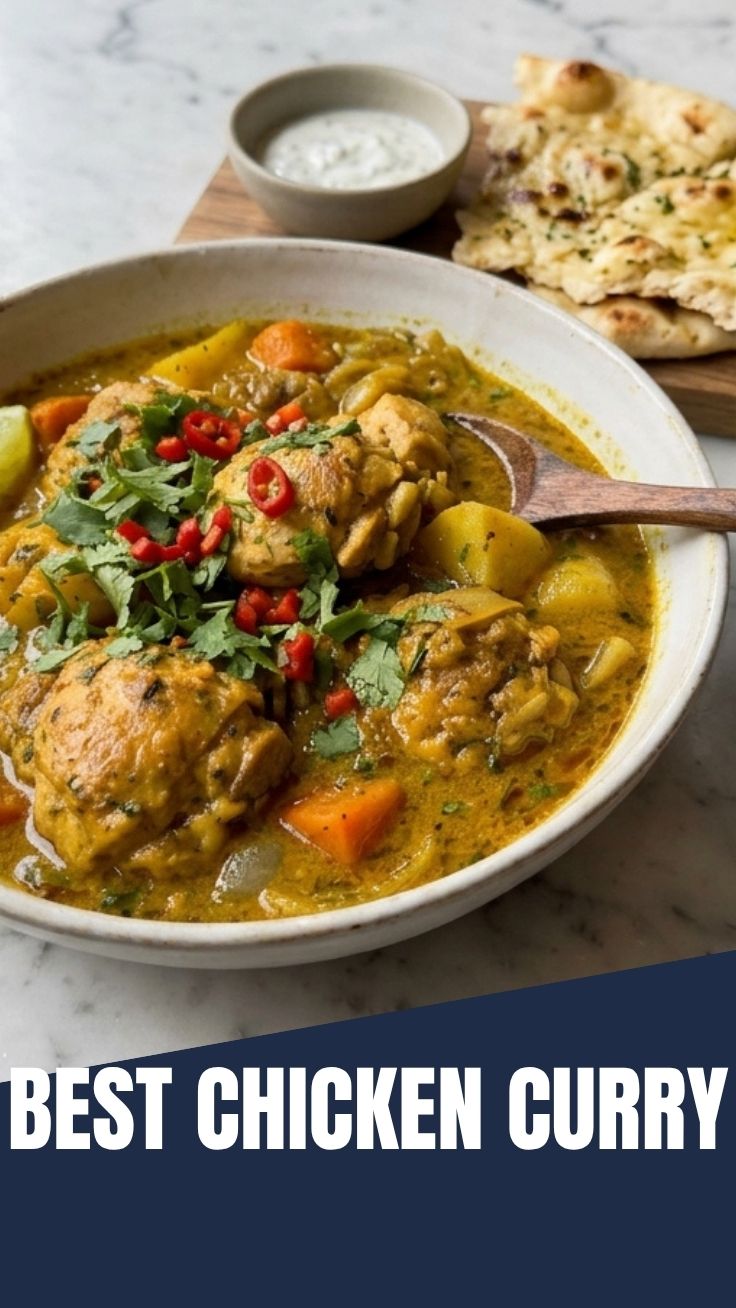
7. Serve: Remove the thyme sprigs before serving. Enjoy hot with rice, roti, or naan bread.
Nutritional Benefits & Advantages
This Chicken Curry is not just flavor-packed but also offers significant nutritional advantages. Chicken is an excellent source of lean protein, essential for muscle repair and growth. Turmeric, a key component of curry powder, is known for its powerful anti-inflammatory and antioxidant properties. Vegetables like potatoes and carrots provide dietary fiber, vitamins (like Vitamin A from carrots), and minerals. Coconut milk, in moderation, offers healthy fats that can contribute to satiety. This dish can be a balanced and wholesome meal, providing energy and essential nutrients.
Tips, Variations & Cooking Advice
- Heat Level: If you’re sensitive to heat, omit the scotch bonnet pepper or use a milder chili like a jalapeño. For more heat, leave some seeds in the scotch bonnet.
- Vegetable Variations: Feel free to add other vegetables like bell peppers, green beans, or sweet potatoes. Add them according to their cooking time – denser vegetables earlier, quicker-cooking ones later.
- Protein Swap: This recipe works beautifully with other proteins like goat, lamb, or even firm tofu for a vegetarian option. Adjust cooking times accordingly.
- Gluten-Free: This recipe is naturally gluten-free! Just ensure your broth and curry powder are certified GF.
- Dairy-Free: As it uses coconut milk, this recipe is already dairy-free.
- Thickening the Sauce: If you prefer an even thicker sauce, you can mash a few pieces of potato against the side of the pot during simmering, or make a light slurry of cornstarch and water and stir it in during the last 5 minutes of cooking.
Common Mistakes to Avoid
- Not Browning the Chicken: Skipping this step means missing out on crucial flavor development and a deeper color.
- Under-Seasoning: Taste as you go! Curry needs proper seasoning to shine. Don’t be afraid to adjust salt and pepper.
- Overcooking the Chicken: While simmering, chicken can become dry if cooked too long. Aim for tender but not stringy.
- Ignoring the Scotch Bonnet: Handle with care! Direct contact with skin can cause irritation. Use gloves and wash hands thoroughly.
- Adding Coconut Milk Too Early: While not disastrous, adding it closer to the end of simmering preserves its delicate flavor and prevents it from splitting if boiled vigorously.
Storage & Meal Prep Tips
This Chicken Curry is fantastic for meal prep as the flavors often deepen overnight.
- Refrigeration: Store cooled leftovers in airtight containers in the refrigerator for up to 3-4 days.
- Freezing: This curry freezes exceptionally well. Allow it to cool completely, then transfer to freezer-safe containers or bags. It can be frozen for up to 2-3 months.
- Reheating: Thaw frozen curry in the refrigerator overnight. Reheat gently on the stovetop over medium-low heat, stirring occasionally, until heated through. You may need to add a splash of water or broth to loosen the sauce. Microwaving is also an option, stirring at intervals.
Conclusion
Mastering a homemade Chicken Curry is a truly rewarding culinary endeavor. With its vibrant spices, tender chicken, and comforting flavors, this dish is sure to become a regular in your rotation. By following these detailed steps, you can confidently create an easy chicken curry recipe that brings the authentic taste of the Caribbean right into your kitchen. Don’t hesitate – gather your ingredients, unleash your inner chef, and prepare to delight your palate with this incredible meal! Share your creations with us, or explore our other exciting recipes for more culinary inspiration.
FAQs
Q1: Can I use chicken breast instead of thighs?
A1: Yes, you can. However, chicken thighs tend to stay more moist and flavorful during simmering. If using breast, be careful not to overcook it, as it can dry out faster.
Q2: What if I can’t find Scotch Bonnet peppers?
A2: You can substitute with a Habanero pepper, which has a similar heat and fruity flavor profile. For a much milder option, use a pinch of cayenne pepper or a chopped jalapeño (remove seeds for less heat).
Q3: How can I make my curry thicker?
A3: For a thicker sauce, you can either simmer the curry uncovered for the last 10-15 minutes to allow some liquid to evaporate, or you can mash a few pieces of the cooked potato against the side of the pot to naturally thicken it. A cornstarch slurry (1 tbsp cornstarch mixed with 2 tbsp cold water) added at the end works too.
Q4: Can I make this a vegetarian or vegan curry?
A4: Absolutely! Omit the chicken and use extra vegetables like chickpeas, lentils, sweet potatoes, bell peppers, and spinach. Use vegetable broth instead of chicken broth.
Q5: What’s the best way to serve this curry?
A5: This Chicken Curry is traditionally served with fluffy white rice, but it also pairs wonderfully with roti, naan bread, or even quinoa. A side of cooling cucumber salad can perfectly complement the spicy flavors.