Unlocking Culinary Magic: The Ultimate Guide to Perfect Pot Roast
Imagine walking into your home after a long day, greeted by the tantalizing aroma of savory, slow-cooked goodness. Doesn’t that sound like a dream? Preparing a delicious Pot Roast at home isn’t just about feeding your family; it’s about creating warmth, comfort, and unforgettable memories. This timeless classic, especially when prepared in a Slow Cooker, transforms simple ingredients into a tender, flavorful masterpiece with minimal effort. It’s the perfect solution for busy weeknights or leisurely weekend gatherings, offering incredible value in both taste and ease.
Ingredients & Kitchen Tools
Crafting the perfect pot roast requires a thoughtful selection of ingredients and the right tools.
- 3-4 lb Chuck Roast: The ideal cut for pot roast; its marbling breaks down beautifully, yielding fall-apart tenderness.
- 1 large Yellow Onion: Quartered, adds a foundational sweetness and aroma to the base.
- 3-4 Carrots: Roughly chopped into chunky pieces, they soften and absorb the rich flavors.
- 3-4 Celery Stalks: Roughly chopped, provides an aromatic counterpart to the carrots and onions.
- 4-6 Yukon Gold Potatoes: Halved or quartered, these starchy potatoes become incredibly tender and flavorful.
- 4 cups Beef Broth: The liquid gold that braises the meat and vegetables, infusing them with rich umami.
- 1 cup Red Wine (Optional): Adds depth and complexity; a dry red like Cabernet Sauvignon works best.
- 2-3 cloves Garlic: Minced or smashed, for an aromatic punch.
- 2 tbsp Olive Oil: For searing the roast, locking in juices and developing a savory crust.
- 2 tbsp All-Purpose Flour: Used to create a thickening slurry for the gravy.
- 1 tbsp Dried Thyme: Classic herb pairing for beef, lending an earthy, slightly floral note.
- 1 tsp Dried Rosemary: Another traditional herb, contributing a piney, aromatic depth.
- Salt & Freshly Ground Black Pepper: To taste, essential for seasoning all components.
Kitchen Tools:
- Large Skillet/Dutch Oven: For searing the beef before transferring to the slow cooker.
- Tongs: For handling and turning the roast during searing.
- Measuring Cups & Spoons: For accurate ingredient quantities.
- Chef’s Knife & Cutting Board: For prepping vegetables and carving the finished roast.
Prep Time & Cooking Schedule
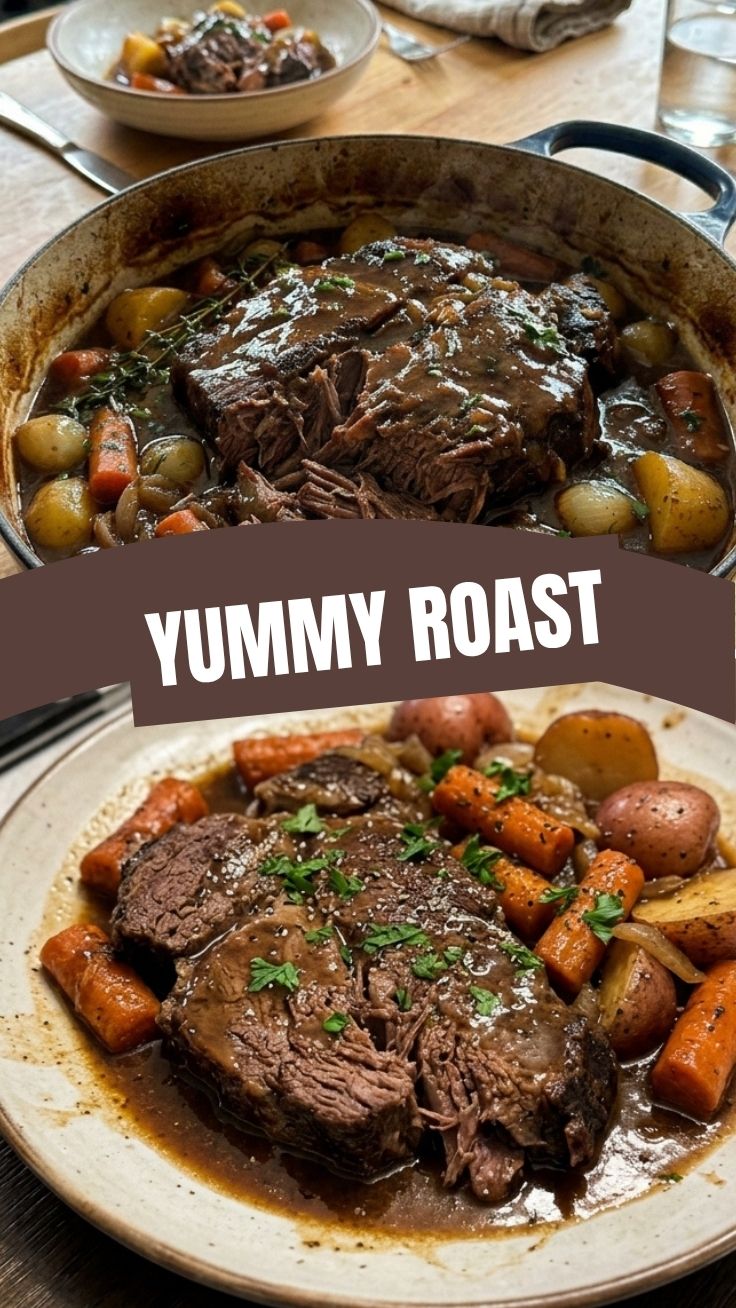
Planning is key to a stress-free cooking experience. This pot roast recipe is designed for maximum flavor with minimal active time.
- Prep Time: 20-25 minutes (includes searing the beef and chopping vegetables).
- Cook Time: 6-8 hours on LOW or 3-4 hours on HIGH in the slow cooker. This extended cooking time is what breaks down the connective tissues in the chuck roast, resulting in incredibly tender meat.
- Resting Time: 15-20 minutes. After cooking, allowing the roast to rest helps redistribute the juices, ensuring a more succulent result. Factor this into your dinner plans to avoid dry meat.
Step-by-Step Instructions
Follow these simple steps to culinary success, ensuring your Pot Roast is nothing short of spectacular.
1. Prepare the Roast: Pat the chuck roast dry with paper towels. Season generously all over with salt and freshly ground black pepper.
2. Sear the Beef: Heat olive oil in a large skillet or Dutch oven over medium-high heat until shimmering. Sear the roast on all sides until a deep, golden-brown crust forms, about 3-4 minutes per side. This step is crucial for developing rich flavor. Transfer the seared roast to your Slow Cooker.
3. Sauté Aromatics: In the same skillet, add the chopped onions, carrots, and celery. Sauté for 5-7 minutes until slightly softened. Stir in the minced garlic and cook for another minute until fragrant.
4. Deglaze (Optional): If using red wine, pour it into the skillet and scrape up any browned bits from the bottom. Let it simmer for a few minutes to reduce slightly.
5. Assemble in Slow Cooker: Arrange the sautéed vegetables around the roast in the slow cooker. Add the potatoes. Pour in the beef broth (and red wine mixture, if using). Sprinkle with dried thyme and rosemary. Season with a little more salt and pepper, if desired.
6. Slow Cook: Cover the slow cooker and cook on LOW for 6-8 hours or on HIGH for 3-4 hours, until the meat is fork-tender and easily shreds.
7. Rest & Serve: Once cooked, carefully remove the roast from the slow cooker and place it on a cutting board. Tent loosely with foil and let it rest for 15-20 minutes. This allows the juices to redistribute, ensuring a more flavorful and moist roast.
8. Thicken Gravy (Optional): While the roast rests, if desired, you can thicken the cooking liquid into a gravy. Ladle some of the hot liquid into a small bowl, whisk in the flour until smooth, then stir this slurry back into the slow cooker. Cook on high for 15-20 minutes, stirring occasionally, until thickened to your desired consistency.
9. Shred & Serve: Shred the pot roast with two forks or slice it against the grain. Serve with the tender vegetables and plenty of savory gravy.
Nutritional Benefits & Advantages
This hearty meal isn’t just delicious; it’s packed with nutritional goodness. Chuck roast is an excellent source of protein, essential for muscle building and repair. It also provides vital iron, supporting healthy blood oxygenation, and B vitamins, crucial for energy metabolism. The array of vegetables — carrots, celery, onions, and potatoes — contribute dietary fiber, vitamins (like Vitamin A from carrots), and minerals, making this a well-rounded and nourishing meal that fuels your body and satisfies your soul.
Tips, Variations & Cooking Advice
- Flavor Boost: Add a bay leaf or two to the slow cooker for an extra layer of aromatic complexity. A tablespoon of Worcestershire sauce can also deepen the savory notes.
- Herb Twist: Experiment with fresh herbs! A sprig of fresh rosemary or thyme added during the last hour of cooking can brighten the flavors.
- Vegetable Variations: Feel free to swap or add other root vegetables like parsnips or sweet potatoes. Green beans can be added towards the end of cooking for a lighter touch.
- Dietary Adaptations: For a gluten-free option, use a cornstarch slurry instead of flour to thicken the gravy. For dairy-free, simply ensure your beef broth is dairy-free (most are).
- Spice It Up: A pinch of red pepper flakes can add a subtle kick if you enjoy a little heat.
Common Mistakes to Avoid
- Not Searing the Meat: Skipping the searing step means missing out on a crucial depth of flavor and that beautiful brown crust. Don’t rush this!
- Overcooking: While a slow cooker is forgiving, overcooking can still lead to dry, stringy meat. Cook until fork-tender, but not to the point of disintegration.
- Undercooking: Tough meat is a sign of undercooking. Patience is key; let the slow cooker work its magic for the full duration.
- Not Seasoning Enough: Pot roast requires ample seasoning. Don’t be shy with salt and pepper, and taste the broth before serving.
- Adding Potatoes Too Early: If you’re using very tender potatoes, adding them at the very beginning might result in mushy potatoes. If this is a concern, add them during the last 2-3 hours of cooking.
Storage & Meal Prep Tips
This Pot Roast is fantastic for meal prep!
- Refrigeration: Store cooled leftovers in airtight containers in the refrigerator for up to 3-4 days. The flavors actually deepen overnight!
- Freezing: For longer storage, freeze portions in freezer-safe containers or bags for up to 3 months. Thaw overnight in the refrigerator before reheating.
- Reheating: Gently reheat on the stovetop over low heat, in the microwave, or in the oven at 300°F (150°C) until warmed through. Add a splash of extra beef broth if it seems dry.
Conclusion
Mastering the art of a tender, flavorful Pot Roast in your own kitchen is a truly rewarding experience. By following this guide, you’re not just preparing a meal; you’re creating comfort, tradition, and delicious memories. The sheer ease and rich flavor achieved using a Slow Cooker truly make this a culinary game-changer. Don’t hesitate to try this recipe, share your savory results in the comments below, or explore our other comforting recipes!
FAQs
Q: Can I use a different cut of beef for pot roast?
A: While chuck roast is highly recommended for its ideal fat-to-meat ratio and tenderness when slow-cooked, you can also use brisket or round roast. Adjust cooking times as needed, as they might require a bit more time to become fork-tender.
Q: How can I prevent my pot roast from being bland?
A: Don’t skip searing the meat for flavor development! Also, ensure you season generously at every step, use quality beef broth, and consider adding aromatics like garlic, herbs, and a splash of red wine. Tasting and adjusting seasoning before serving is crucial.
Q: My gravy is too thin/too thick. How can I fix it?
A: If it’s too thin, create a slurry with 1-2 tablespoons of cornstarch mixed with an equal amount of cold water, then whisk it into the hot liquid and simmer until thickened. If it’s too thick, simply add more beef broth or water until it reaches your desired consistency.
Q: Can I make this pot roast without a slow cooker?
A: Yes! You can make it in a Dutch oven on the stovetop or in the oven. Follow the same searing steps, then braise covered in a 325°F (160°C) oven or on low heat on the stovetop for 3-4 hours, or until fork-tender.
Q: How do I know when the pot roast is done?
A: The pot roast is done when it is incredibly tender and can be easily shredded with a fork. It should not be tough or resistant when poked.