The Ultimate Guide to Crafting the Perfect Roasted Vegetable Soup: A Culinary Journey
Ever craved a meal that warms you from the inside out, offering both comfort and a burst of vibrant flavor? Look no further than a perfectly made Roasted Vegetable Soup. This isn’t just any soup; it’s a testament to the magic that happens when simple, fresh ingredients are transformed through the art of roasting. Preparing this at home not only guarantees a wholesome, preservative-free delight but also allows you to control every aspect of its deliciousness, from the seasoning to the texture. It’s an opportunity to embrace the joy of creating truly nourishing Homemade Soup Recipes that cater to your taste buds and well-being.
Ingredients & Kitchen Tools
Crafting the perfect soup begins with the right components.
Key Ingredients:
- 2 lbs mixed root vegetables: (e.g., carrots, parsnips, butternut squash, sweet potatoes, red onions) – Cut into 1-inch pieces for even roasting and varied texture.
- 1 head garlic: peeled, cloves left whole – Adds a deep, mellow flavor when roasted.
- 2 tbsp olive oil: Extra virgin preferred for flavor – Essential for roasting and developing a rich crust.
- 1 tsp dried thyme: or 1 tbsp fresh, chopped – Earthy, aromatic herb complementing vegetables.
- ½ tsp dried rosemary: or 1 tbsp fresh, chopped – Piny, woody notes that stand up to roasting.
- Salt and freshly ground black pepper: To taste – Basic seasoning, crucial for enhancing natural flavors.
- 6 cups vegetable broth: Low sodium preferred – Forms the liquid base of the soup, adding depth.
- ½ cup full-fat coconut milk (optional): For creaminess and a subtle sweetness – A dairy-free alternative to cream.
- Fresh parsley or chives: For garnish – Adds freshness and a pop of color.
Kitchen Tools:
- Large baking sheet: Essential for spreading vegetables evenly for optimal roasting.
- Large pot or Dutch oven: For simmering the soup – Ensures heat retention and even cooking.
- Blender (immersion or standing): To achieve a smooth, creamy consistency – An immersion blender offers convenience.
- Sharp knife and cutting board: For efficient and safe vegetable preparation.
- Measuring cups and spoons: For precise ingredient quantities.
- Vegetable peeler: For effortless peeling of root vegetables.
Prep Time & Cooking Schedule
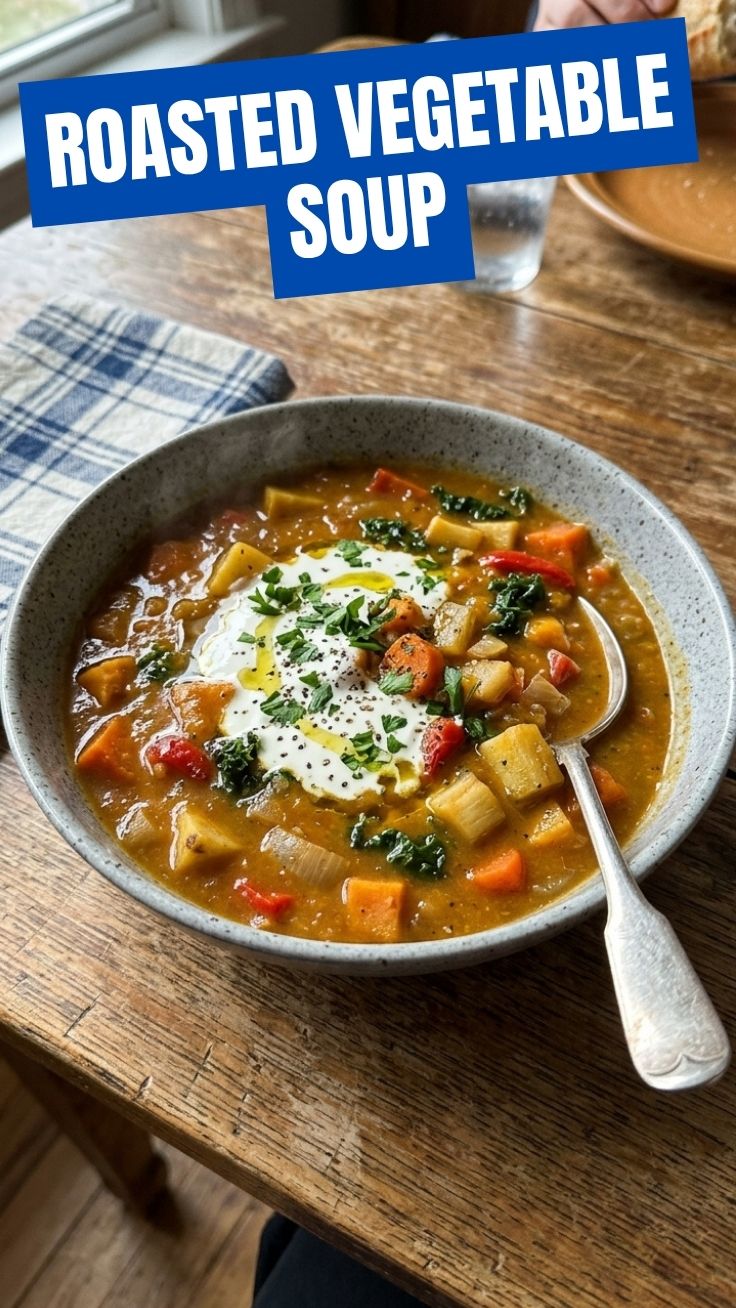
Planning is key to a stress-free cooking experience. This Roasted Vegetable Soup recipe offers a rewarding journey from prep to plate.
- Prep Time: 20 minutes (for chopping and seasoning)
- Roasting Time: 30-40 minutes (until vegetables are tender and slightly caramelized)
- Simmering Time: 15-20 minutes
- Blending Time: 5 minutes
- Total Time: Approximately 1 hour 15 minutes
This schedule allows you to get other tasks done while the vegetables roast, making it perfect for a leisurely weekend meal or a dedicated weeknight cooking session.
Step-by-Step Instructions
Follow these clear steps to achieve a perfectly balanced and flavorful soup.
1. Preheat Oven & Prepare Vegetables: Preheat your oven to 400°F (200°C). On a large baking sheet, toss the chopped mixed root vegetables and peeled garlic cloves with olive oil, dried thyme, dried rosemary, salt, and pepper. Ensure the vegetables are spread in a single layer to roast evenly and brown beautifully. Overcrowding will steam them instead of roasting.
2. Roast the Vegetables: Roast for 30-40 minutes, or until the vegetables are tender, slightly caramelized, and fragrant. A good roast is crucial for the depth of flavor in this Roasted Vegetable Soup.
3. Simmer in Broth: Transfer the roasted vegetables and garlic to a large pot or Dutch oven. Pour in the vegetable broth. Bring to a boil, then reduce heat and simmer for 15-20 minutes, allowing the flavors to meld beautifully. This step ensures all those delicious roasted notes infuse into the broth, creating an extraordinary foundation for one of the finest Homemade Soup Recipes you’ll ever make.
4. Blend to Perfection: Carefully blend the soup until smooth using an immersion blender directly in the pot. Alternatively, transfer the soup in batches to a standing blender, blending until creamy. If using a standing blender, be cautious with hot liquids and fill the pitcher only halfway.
5. Adjust Seasoning & Serve: Stir in coconut milk if desired, then taste and adjust seasoning as needed. Serve hot, garnished with fresh parsley or chives.
Nutritional Benefits & Advantages
This soup is a powerhouse of nutrition! Root vegetables are rich in dietary fiber, promoting digestive health and satiety. They are excellent sources of vitamins A and C, crucial for immune function and vision. Butternut squash and sweet potatoes provide beta-carotene, a powerful antioxidant. Garlic adds antioxidant and anti-inflammatory properties. Overall, this soup is low in calories, high in nutrients, and naturally gluten-free and vegan, making it a fantastic choice for a healthy lifestyle.
Tips, Variations & Cooking Advice
- Flavor Variations: Add a pinch of smoked paprika for a smoky depth, or a touch of red pepper flakes for a subtle heat. A squeeze of fresh lemon juice at the end brightens all the flavors.
- Ingredient Swaps: Feel free to experiment with other sturdy vegetables like bell peppers (add halfway through roasting), zucchini, or even cauliflower.
- Alternative Cooking Methods: While roasting is key, you can adapt this by sautéing vegetables until tender, though the flavor profile will differ.
- Dietary Adaptations: This recipe is naturally vegan and gluten-free. For a richer, creamier texture, you can add a swirl of heavy cream instead of coconut milk.
- Portion Changes: Easily double the recipe to feed a crowd or for meal prepping.
Common Mistakes to Avoid
- Overcrowding the baking sheet: This leads to steamed, not roasted, vegetables. Use two baking sheets if necessary.
- Under-roasting: Ensure vegetables are truly tender and slightly browned for maximum flavor.
- Forgetting to season: Salt and pepper are critical for bringing out the natural sweetness and earthiness of the vegetables. Season generously.
- Not blending properly: A smooth texture is part of this soup’s appeal. Blend until no large chunks remain.
Storage & Meal Prep Tips
This soup is a fantastic candidate for meal prepping!
- Refrigeration: Store leftover soup in an airtight container in the refrigerator for up to 4-5 days.
- Freezing: This soup freezes beautifully. Allow it to cool completely, then transfer to freezer-safe containers or bags. It will keep in the freezer for up to 3 months.
- Reheating: Reheat gently on the stovetop over medium heat, stirring occasionally, until warmed through. Alternatively, microwave in individual portions. Add a splash of broth or water if it’s too thick.
Conclusion
Embracing the art of homemade cooking doesn’t have to be complicated, and this Roasted Vegetable Soup proves just that. It’s a culinary journey from humble ingredients to a rich, heartwarming bowl of goodness. By following this guide, you’ve not only created a delicious and nutritious meal but also mastered a fundamental technique that will elevate your future Homemade Soup Recipes. Don’t hesitate to personalize it, make it your own, and share your creations with loved ones. Happy cooking!
FAQs
Q1: Can I use frozen vegetables for roasting?
A1: While fresh vegetables are preferred for optimal caramelization, you can use frozen mixed root vegetables. Thaw them completely and pat them very dry before roasting to prevent excess moisture.
Q2: What if my soup is too thick or too thin after blending?
A2: If it’s too thick, simply add more vegetable broth (a quarter cup at a time) until it reaches your desired consistency. If too thin, you can simmer it uncovered for a bit longer to allow some liquid to evaporate, or stir in a tablespoon of cornstarch mixed with a little cold water and simmer until thickened.
Q3: Can I add protein to this soup?
A3: Absolutely! Cooked shredded chicken, white beans, or lentils can be stirred in after blending to add a boost of protein, transforming it into a more substantial meal.
Q4: How can I make this soup spicier?
A4: Add a pinch of red pepper flakes during the roasting process, or a dash of cayenne pepper when simmering for a subtle kick. A few drops of hot sauce at the end also work well.
Q5: What are some good toppings for this soup?
A5: Besides fresh herbs, consider croutons, a dollop of Greek yogurt or crème fraîche (if not dairy-free), toasted pumpkin seeds, a swirl of chili oil, or a sprinkle of nutritional yeast for a cheesy flavor.