Recreate Restaurant Magic: Your Guide to Perfect Homemade Sesame Chicken!
Ever wonder how your favorite Sesame Chicken achieves that irresistible balance of sweet, savory, and tangy? What if I told you that culinary magic isn’t confined to restaurant kitchens, and you can easily replicate—and even surpass—that beloved Chinese Takeout experience right in your own home? Preparing this classic dish yourself offers invaluable benefits: complete control over ingredients, a fresher taste, and the immense satisfaction of a homemade meal. Forget questionable additives and enjoy a delicious, wholesome, and incredibly flavorful Sesame Chicken that tastes even better than the restaurant version.
Ingredients & Kitchen Tools
- For the Chicken:
* 1.5 lbs boneless, skinless chicken thighs or breasts: Cut into 1-inch pieces. Thighs offer more juiciness, breasts are leaner.
* 1/2 cup cornstarch: For dredging and achieving a crispy exterior.
* 1 large egg, beaten: Helps cornstarch adhere to the chicken.
* 1/4 tsp salt: Enhances flavor.
* 1/4 tsp black pepper: Adds a subtle kick.
* 2-3 cups vegetable oil: For shallow frying; ensures a golden, crispy crust.
- For the Sauce:
* 1/2 cup chicken broth: Base for the sauce.
* 1/4 cup soy sauce (low-sodium preferred): Umami and saltiness.
* 1/4 cup honey or brown sugar: Sweetness and caramelization.
* 2 tbsp rice vinegar: Tangy counterpoint.
* 1 tbsp sesame oil: Essential nutty flavor.
* 1 tbsp fresh ginger, grated: Pungent, aromatic depth.
* 2 cloves garlic, minced: Adds savory complexity.
* 1 tbsp cornstarch mixed with 2 tbsp cold water (slurry): Thickens the sauce.
- For Garnish & Serving:
* 2 tbsp toasted sesame seeds: For garnish and extra sesame flavor.
* 2 green onions, sliced: Fresh, mild onion flavor and vibrant color.
* Cooked rice or noodles: For serving.
- Kitchen Tools:
* Large mixing bowls (2-3): For dredging and sauce preparation.
* Whisk: For blending sauce ingredients.
* Large skillet or wok: For frying chicken and cooking sauce.
* Tongs or slotted spoon: For handling chicken.
* Wire rack with paper towels: For draining fried chicken.
* Measuring cups and spoons: For accurate ingredient quantities.
Prep Time & Cooking Schedule
- Prep Time: 20 minutes (includes chopping chicken, mincing garlic/ginger, and whisking sauce)
- Marinating Time (Optional): 15-30 minutes (for extra tender chicken, marinate in a splash of soy sauce and sesame oil before dredging).
- Cook Time: 15-20 minutes (frying chicken, cooking sauce, combining).
This recipe is perfect for a weeknight meal when you crave delicious Sesame Chicken but are short on time. The bulk of the prep can be done in advance, making dinner assembly a breeze.
Step-by-Step Instructions
1. Prepare the Chicken: In a bowl, toss the chicken pieces with salt and pepper. In a separate shallow bowl, whisk the egg. In a third shallow bowl, add the cornstarch. Dip each chicken piece first into the egg, then thoroughly coat it in cornstarch, shaking off any excess. This double-coating ensures maximum crispiness.
2. Fry the Chicken: Heat 2-3 cups of vegetable oil in a large skillet or wok over medium-high heat until it reaches 350-375°F (175-190°C). Fry the chicken in batches, being careful not to overcrowd the pan, for 3-4 minutes per side, or until golden brown and cooked through. Use tongs to turn them. Transfer the crispy chicken to a wire rack lined with paper towels to drain excess oil.
3. Prepare the Sauce: While the chicken fries, whisk together the chicken broth, soy sauce, honey (or brown sugar), rice vinegar, sesame oil, grated ginger, and minced garlic in a medium bowl.
4. Thicken the Sauce: Once all chicken is fried, carefully pour out most of the oil from the skillet, leaving about 1 tablespoon. Add the sauce mixture to the skillet and bring it to a gentle simmer over medium heat. Stir in the cornstarch slurry and cook, stirring constantly, for 1-2 minutes until the sauce thickens to your desired consistency.
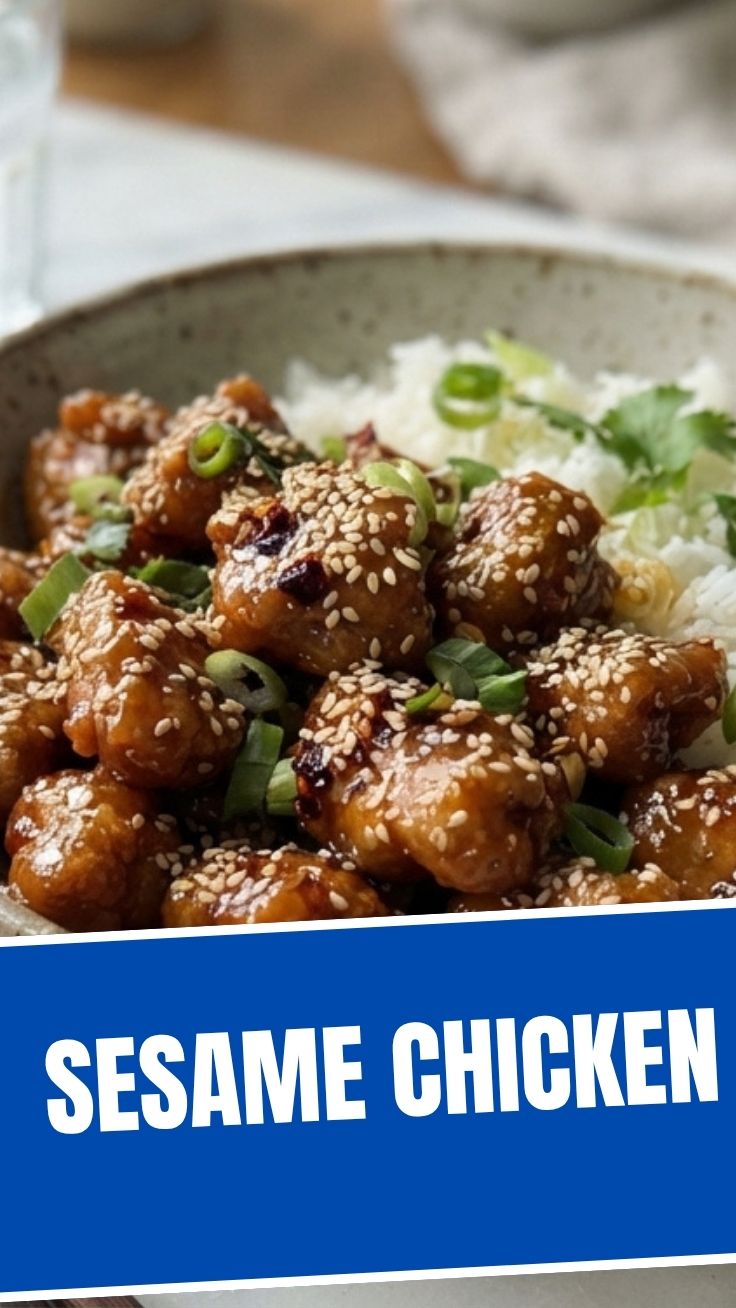
5. Combine & Serve: Add the fried Sesame Chicken to the skillet with the thickened sauce. Toss gently to coat all the chicken pieces evenly. Garnish with toasted sesame seeds and sliced green onions. Serve immediately over your favorite rice or noodles for an authentic Chinese Takeout experience, elevated by homemade goodness.
Nutritional Benefits & Advantages
Homemade Sesame Chicken allows for significantly healthier choices compared to commercial versions. By controlling the amount of sugar and sodium, you can enjoy a dish that is lower in calories and higher in protein. Chicken is an excellent source of lean protein, essential for muscle repair and satiety. Sesame seeds provide healthy fats, fiber, and important minerals like calcium and iron. Fresh ginger and garlic offer anti-inflammatory and antioxidant benefits. This dish is a flavorful way to incorporate quality protein and fresh aromatics into your diet.
Tips, Variations & Cooking Advice
- Spice It Up: Add a pinch of red pepper flakes to the sauce for a spicy kick.
- Vegetarian Option: Substitute chicken with extra-firm tofu or tempeh, pressed and cubed, then fried until crispy.
- Gluten-Free: Use tamari instead of soy sauce and ensure your chicken broth is gluten-free.
- More Veggies: Stir-fry some broccoli florets, bell peppers, or snap peas and add them to the sauce just before adding the chicken for added nutrition and crunch.
- Air Fryer Method: For a healthier alternative, coat the chicken as instructed, then air fry at 400°F (200°C) for 10-15 minutes, flipping halfway, until crispy and cooked through.
Common Mistakes to Avoid
- Overcrowding the Pan: Frying too much chicken at once lowers the oil temperature, leading to soggy, rather than crispy, chicken. Fry in batches.
- Skipping the Slurry: The cornstarch slurry is crucial for thickening the sauce. Without it, your sauce will be watery.
- Overcooking the Sauce: Once thickened, remove the sauce from the heat quickly to prevent it from becoming too gloopy.
- Not Draining Excess Oil: Excess oil makes the dish greasy. Always drain fried chicken on a wire rack.
- Using Raw Sesame Seeds: Toasting sesame seeds significantly enhances their nutty flavor.
Storage & Meal Prep Tips
Store leftover Sesame Chicken in an airtight container in the refrigerator for up to 3-4 days. To maintain crispiness, it’s best to store the chicken and sauce separately if possible, or gently reheat in a skillet over medium heat for a few minutes until warmed through, or in an oven at 300°F (150°C) for 10-15 minutes. Freezing is possible, but the texture of the fried chicken may soften upon thawing and reheating. For meal prep, cook the chicken and sauce separately, then combine and reheat portions as needed throughout the week.
Conclusion
Mastering homemade Sesame Chicken is an incredibly rewarding culinary adventure. You’ve now unlocked the secrets to creating a dish that’s not only incredibly delicious but also fresher and more wholesome than any Chinese Takeout option. With fresh ingredients, a clear process, and a dash of enthusiasm, you can bring this restaurant-quality favorite directly to your dinner table. Give this recipe a try, experiment with your own twists, and savor the satisfaction of a truly homemade meal. Share your creations in the comments below – we’d love to see them!
FAQs
Q1: Can I make this with chicken breast instead of thighs?
A1: Yes, chicken breast works well, but be careful not to overcook it as it can dry out faster than thighs.
Q2: How do I get my chicken extra crispy?
A2: Ensure your oil is hot enough (350-375°F), don’t overcrowd the pan, and use the double-dredging method with egg and cornstarch.
Q3: Can I prepare the sauce in advance?
A3: Absolutely! You can whisk the sauce ingredients together and store them in the refrigerator for up to 2-3 days. Add the cornstarch slurry just before heating.
Q4: What if I don’t have fresh ginger?
A4: You can use about 1/2 teaspoon of ground ginger powder, but fresh ginger provides a more vibrant and pungent flavor.
Q5: How can I make this dish less sweet?
A5: Reduce the amount of honey or brown sugar in the sauce by half and taste. You can always add more if needed.