Whisk Up a Taste of the Aegean: The Ultimate Greek Salad Recipe
Ever dreamt of capturing the vibrant flavors of the Mediterranean right in your own kitchen? Imagine a dish bursting with fresh vegetables, tangy feta, and a zesty dressing – a perfect symphony for your taste buds. Preparing the quintessential Greek Salad at home isn’t just about making a meal; it’s about crafting an experience, a journey to sun-drenched shores from the comfort of your home. Forget bland, pre-packaged versions. This comprehensive guide will empower you to create a authentic Greek Salad that rivals any taverna, offering a refreshing and healthy addition to any meal.
Ingredients & Kitchen Tools
To embark on your culinary adventure, gather these fresh ingredients and essential tools:
- 1 large cucumber: Preferably English or Persian, for minimal seeds and crispness.
- 2-3 ripe tomatoes: Vine-ripened or heirloom varieties offer the best flavor.
- 1 red onion: Thinly sliced for a milder taste; soak in ice water for 10 minutes to reduce sharpness if preferred.
- 1 green bell pepper: Crunchy and sweet, providing a delightful contrast.
- 1/2 cup Kalamata olives: Pitted and brine-cured for that authentic Greek tang.
- 4 oz block of feta cheese: Opt for genuine Greek feta, often sold in brine, for superior flavor and texture. Avoid pre-crumbled for best results.
- 1/4 cup extra virgin olive oil: High quality is crucial for the dressing.
- 2 tbsp red wine vinegar: Adds a sharp, bright counterpoint.
- 1 tsp dried oregano: Greek oregano if possible, for intensity.
- Salt and freshly ground black pepper: To taste.
- Optional Substitutions: Cherry tomatoes for convenience, yellow bell pepper for a sweeter note, skip olives if not a fan, or use a squeeze of lemon juice instead of some vinegar for extra brightness.
Kitchen Tools:
- Large mixing bowl
- Sharp chef’s knife
- Cutting board
- Measuring spoons and cups
- Whisk (for dressing)
Prep Time & Cooking Schedule
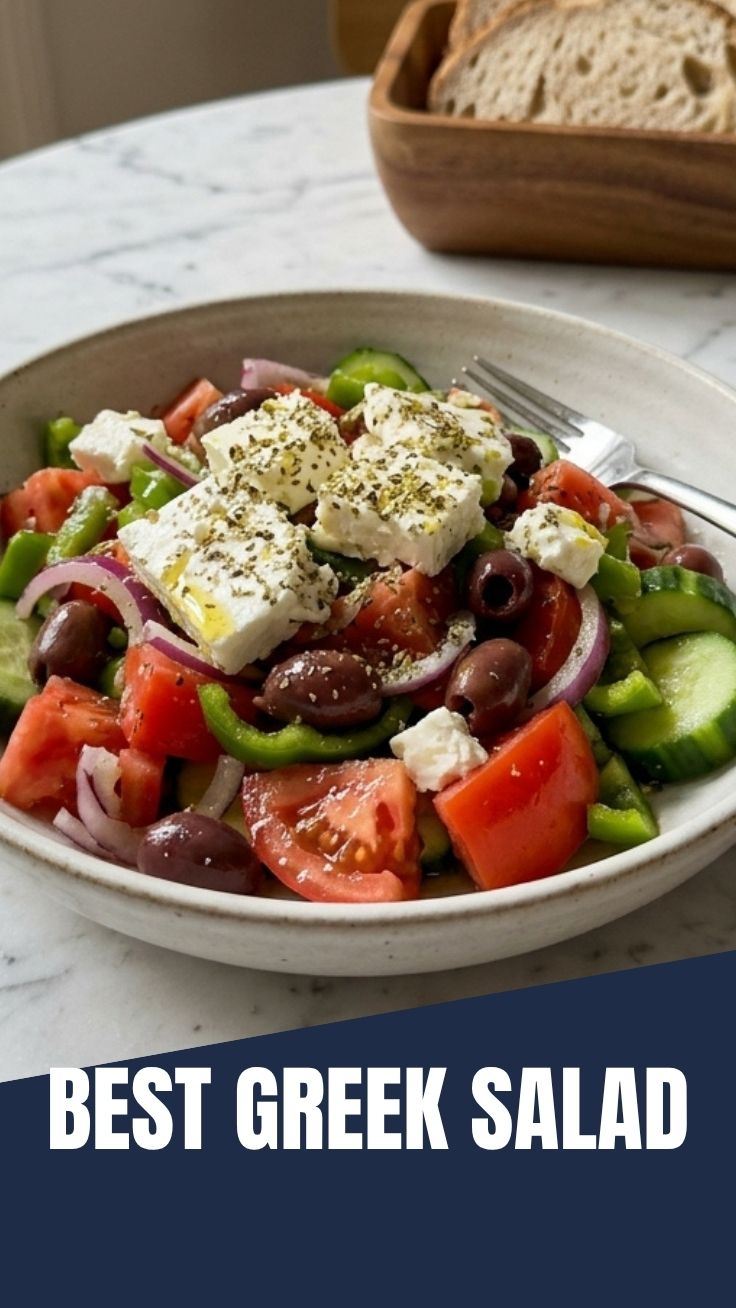
This recipe is a marvel of speed and simplicity, perfect for a quick lunch or a refreshing side at dinner.
- Prep Time: 15-20 minutes (depending on your chopping speed).
- Resting Time: 10 minutes (highly recommended for flavors to meld).
There is no cooking time involved, making this an ideal no-cook option for busy days. Plan to assemble it shortly before serving to maintain optimal freshness and crispness, though a brief resting period allows the vibrant flavors to truly marry.
Step-by-Step Instructions
Creating a phenomenal Greek Salad is all about careful preparation and quality ingredients, ensuring a truly authentic Mediterranean experience.
1. Prepare the Vegetables: Wash all your vegetables thoroughly. Dice the cucumber and tomatoes into bite-sized pieces. Thinly slice the red onion into rings or half-moons; if its sharpness is a concern, soak it in ice water for 10 minutes, then drain well. Core and deseed the green bell pepper, then chop it into similar-sized pieces. Combine all chopped vegetables in your large mixing bowl.
2. Add Olives: Add the pitted Kalamata olives to the bowl with the other vegetables.
3. Make the Dressing: In a small bowl or jar, whisk together the extra virgin olive oil, red wine vinegar, dried oregano, salt, and freshly ground black pepper until well combined. Taste and adjust seasoning as needed.
4. Dress the Salad: Pour the dressing over the vegetables and olives. Gently toss to ensure all ingredients are lightly coated. Avoid over-tossing, which can bruise the vegetables.
5. Add Feta: Place the block of feta cheese directly on top of the dressed salad. You can crumble it lightly or leave it as a whole block for presentation, allowing guests to break off pieces.
6. Serve: For best results, let the salad rest for 10 minutes before serving. This allows the flavors to meld beautifully. Serve immediately as a light meal or a vibrant side dish.
Nutritional Benefits & Advantages
This Greek Salad is a powerhouse of nutrition. Cucumbers and tomatoes are rich in vitamins K and C, and essential antioxidants. Bell peppers contribute Vitamin A and B6. Kalamata olives and extra virgin olive oil are excellent sources of healthy monounsaturated fats, known for their heart-protective qualities. Feta cheese provides a good dose of calcium and protein. The overall composition makes it a low-calorie, high-fiber, and nutrient-dense meal, embodying the health principles of the Mediterranean diet, which is celebrated for promoting longevity and well-being.
Tips Variations & Cooking Advice
- Add Protein: For a more substantial meal, add grilled chicken, canned chickpeas, or even salmon.
- Herb Variations: While oregano is classic, fresh mint or parsley can add an interesting aromatic twist.
- Spicier Kick: A pinch of red pepper flakes in the dressing can introduce a subtle heat.
- Dairy-Free: Skip the feta or substitute with a plant-based feta alternative for a vegan option.
- Serving Suggestion: Serve with warm pita bread or crusty whole-grain bread for dipping into the flavorful dressing.
- Ingredient Quality: The success of this simple salad hinges on the quality of its components. Invest in fresh, ripe produce and good quality olive oil and feta.
Common Mistakes to Avoid
- Pre-Dressing Too Early: Dressing the salad too far in advance can make the vegetables soggy. Dress just before serving or allow a maximum of 10-15 minutes for flavors to meld.
- Using Pre-Crumbled Feta: Pre-crumbled feta often contains anti-caking agents that can alter its texture and flavor. A block of genuine Greek feta is always superior.
- Over-Tossing: Aggressive tossing can bruise delicate ingredients like tomatoes and cucumbers. Be gentle!
- Skipping the Onion Soak: If you’re sensitive to raw onion, don’t skip the ice water soak; it significantly mellows the flavor.
- Skimping on Olive Oil: Good quality extra virgin olive oil is integral to the authentic flavor profile of a Greek Salad.
Storage & Meal Prep Tips
While best enjoyed fresh, leftovers can be stored. Place any remaining Greek Salad in an airtight container in the refrigerator for up to 1-2 days. Be aware that the vegetables may soften, and the dressing might cause them to release more liquid, making the salad less crisp over time. It’s generally not recommended to freeze this salad. If meal prepping, store the dressing separately and combine just before eating to maintain optimal texture.
Conclusion
Embracing the simplicity and vibrant flavors of the Greek Salad is an effortless way to bring the health benefits and delicious tastes of the Mediterranean diet into your daily routine. This recipe is more than just a collection of ingredients; it’s an invitation to savor fresh, wholesome food that nourishes both body and soul. We encourage you to whip up this delightful salad tonight and share your culinary creations with us! What are your favorite additions or variations?
FAQs
Q1: Can I make the dressing in advance?
A1: Yes, the dressing can be prepared and stored in an airtight container in the refrigerator for up to a week. Shake well before using.
Q2: What’s the best way to choose ripe tomatoes for this salad?
A2: Look for tomatoes that are brightly colored, firm yet slightly yielding to the touch, and have a fragrant, earthy smell at the stem end.
Q3: Can I add other vegetables to this Greek Salad?
A3: Absolutely! While the classic recipe is simple, feel free to add ingredients like thinly sliced radishes, capers, or even grilled zucchini for variety.
Q4: Is Kalamata olive brine interchangeable with red wine vinegar in the dressing?
A4: Not entirely. While the brine has a similar tang, it’s saltier and lacks the specific acidic profile of red wine vinegar. You could use a small amount of brine for extra flavor, but it shouldn’t replace the vinegar entirely.